MyIno App in Inovallée Smart Technology Park

✅ Finalized

📍 Grenoble (Inovallée), Isère, France

Short Description

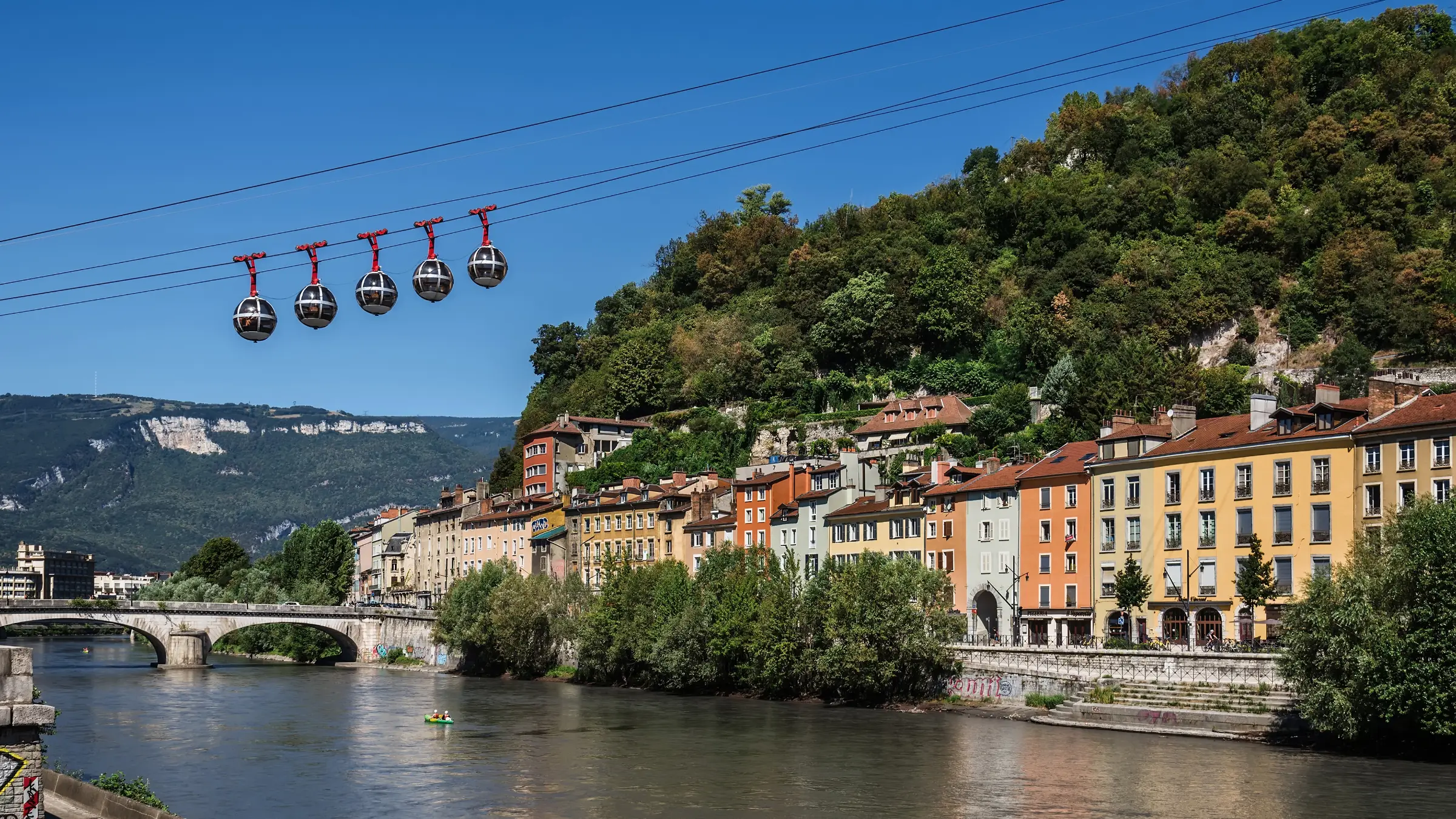
Inovallée is a technology park on the north-eastern edge of Grenoble, covering Meylan and Montbonnot-Saint-Martin. It opened in 1972 as ZIRST, one of France’s first technology parks, and was renamed Inovallée in 2005. Today, the park is home to over 360 companies and about 11,000 employees, with around 80 per cent working in digital fields. Grenoble joined Bristol, Fujisawa and Tsukuba as one of the four pilot cities for BigClouT, with Grenoble-Alpes Métropole helping to lead the project.

The challenges at Inovallée were not the city’s or any one employer’s responsibility. Employees shared buses, canteens, parking and events, but information about these services was scattered. The metropolitan authority shared bus schedules, the catering company posted lunch menus and the park association listed events, but no one brought it all together.

MyIno App helped solve this problem. Kentyou, a UTA member, provided the sensiNact platform at the project’s core. Grenoble-Alpes Métropole, also a UTA member, supported the pilot and shared transport data. Inovallée hosted and led the project, while CEA-Leti handled sensiNact research and development.

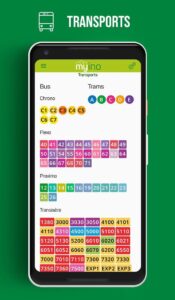
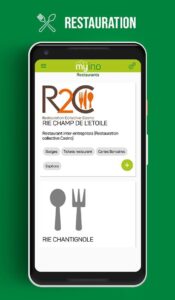
The app provides real-time transport updates from the Métromobilité platform, including nearby stops and arrival alerts. It also shows daily menus from the three Elior-run restaurants through Timechef, news from the Inovallée blog, events from Agilyteam and SortieSport, a searchable directory of park companies by technology and sector, and an interactive map that brings everything together.
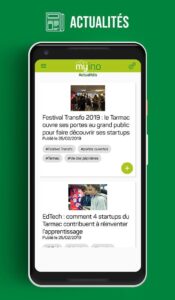
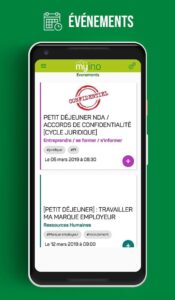
MyIno App news screen with Inovallée park and start-up newsMyIno App events screen listing professional breakfasts in the parkMyIno App transport screen listing Grenoble bus and tram linesMyIno App restaurants screen listing company restaurants in Inovallée

MyIno App brings news, events, transport and restaurant information into one app.

SensiNact handles the data aggregation, collecting real-time information from each source and sharing it in a common format. The BigClouT data lake and Knowage analytics suite support this process. Inovallée designed the back end and led the project, Ascanio built the front end, and Grenoble-Alpes Métropole co-led the pilot and collected the metrics. Version 1 launched on 14 March 2019 for Android, iOS and the web at myino.app.

Key goal or objective

The goal was to improve services and connectivity for people working in a large technology park by bringing together information from different organisations — such as transport, catering, events, news and the company directory — into one real-time, personalised interface. The project also aimed to show that a smart city data platform can serve a specific community as well as an entire city.
Pilot Overview

A technology park is in a unique position: it is too big for one company to manage, but too specialised to be treated like a regular district. Most Inovallée employees arrive in the morning and leave in the evening, so they are not residents. They rely on shared services they don’t control and often struggle to find out which bus is coming, what the canteen is serving, what events are happening, or which of the 360 companies can help them.

All of this information was already available in different databases. However, park users could not access it when they needed it, and no one ever presented it together.

Inovallée built its response around the idea of ‘tech for humans’. The association had two main goals: to automate routine tasks so staff could focus on guidance and community building, and to give users personalised, easy-to-access information on any device.

BigClouT supplied the technical framework. The project combined big data, cloud computing and IoT to strengthen citizens’ influence in smart cities; the European Commission funded it under Horizon 2020, and NICT funded the Japanese partners. It ran from 1 July 2016 to 30 June 2019 across Grenoble, Bristol, Fujisawa and Tsukuba. Inovallée describes it as a three-year, roughly €3 million experiment across 13 partners, seven European and six Japanese. Grenoble ran two strands — assessing the impact of city events and optimising the technology park — and this pilot focused on the latter.

CEA-Leti originally designed the sensiNact platform for data aggregation; Kentyou now owns and commercially develops it. The platform collects real-time data from different sources and redistributes it through a common interface, allowing applications to integrate transport APIs, catering feeds and event calendars as a single set of inputs. The platform is now part of the Eclipse Foundation ecosystem.

Challenges Addressed

Managing a large site with many occupants presents four main challenges.

First, information is scattered across organisations. Each group shares updates within its own area, but no single channel brings everything together.

Second, there is no direct line to the workforce. Inovallée’s leadership highlighted the lack of a direct way to communicate with the people working on the site.

Third, routine questions take up staff time. Park staff spent significant time answering questions about transport, menus and companies, taking them away from their core work of providing guidance and building the community.

Fourth, smart city platforms are rarely tested within a clearly defined community. Most municipal IoT projects target an entire city and a broad population. A technology park has a specific user group with clear daily needs, making it a useful environment for testing whether data aggregation delivers practical value.

Solutions Tested

Current Status

Completed

Achieved Results

Inovallée launched MyIno App version 1 on 14 March 2019, three and a half months before BigClouT ended. The park itself, rather than the project, continued to run the app after launch.

Adoption grew steadily, with over 170 downloads in the first two months and more than 1,000 in total — about one in eleven people in the park’s workforce.

The app gave Inovallée a direct way to reach its workforce, something it did not have before. As the park’s general director put it, applications are now part of daily life, and MyIno App lets the park communicate directly with its employees.

The pilot demonstrated that a smart city aggregation platform can serve a specific professional community as well as an entire city. sensiNact combined a metropolitan transport API, a commercial catering feed, a blog and two event sources into one interface without needing a custom integration for each.

Grenoble kept using and improving the app after the project ended, adding features such as user authentication, sports activities, community event modules and job listings. The association launched with a roadmap for future development, not just a finished demo.

The delivery model transferred as well as the technology. The park association took on the back end and project management, the research institute supplied the platform and a specialist built the front end. As a result, the app gained an owner with a continuing reason to maintain it once the research funding stopped.

Innovators

Share the Post: