Status:
✅ Finalized
⇨
Context
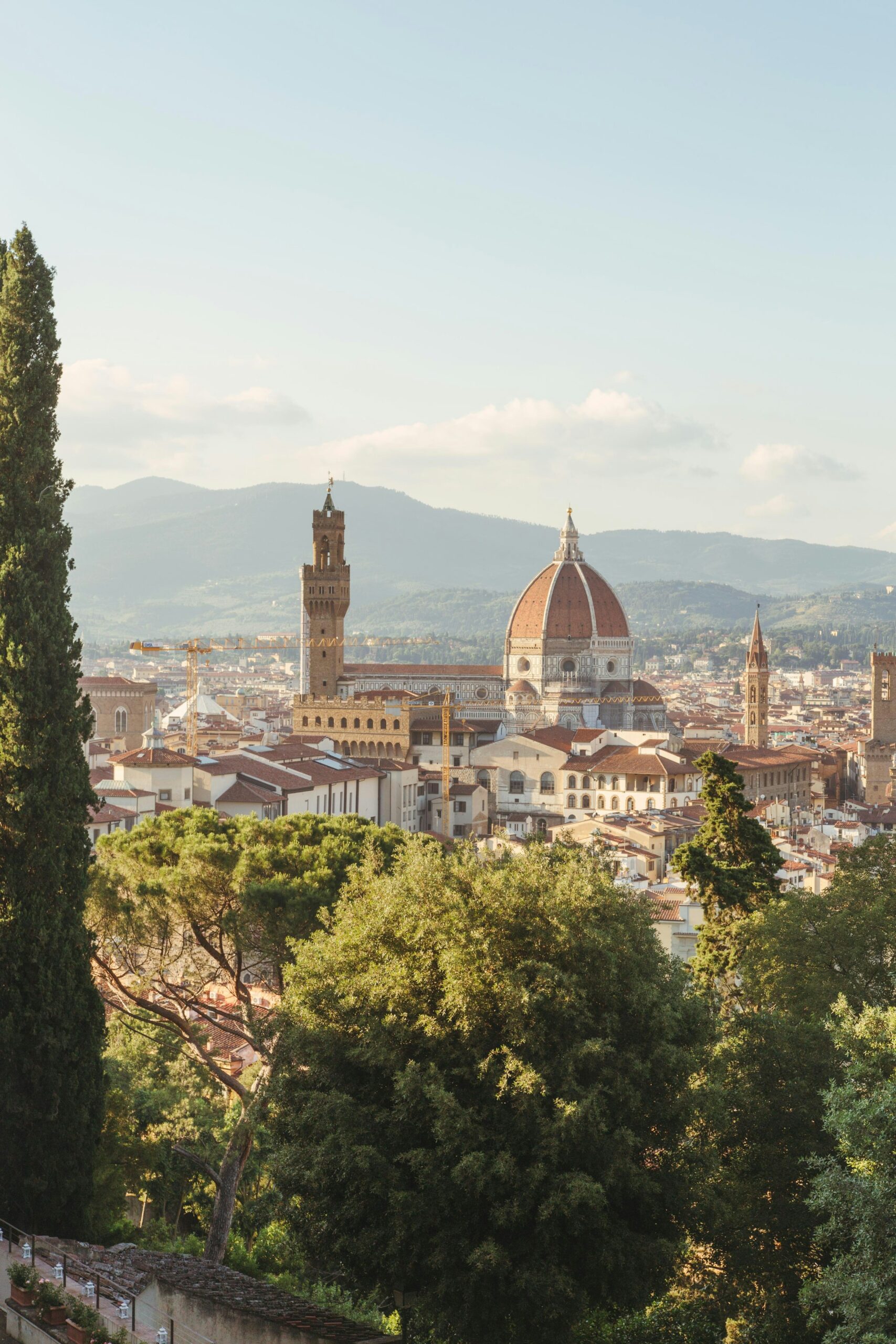
Florence’s historic centre is a UNESCO World Heritage Site. The city is committed to climate neutrality by 2030 and wants a healthier, more liveable urban environment, with priorities that include better environmental quality, more access to green space and a ‘15-minute city’ in which services are easy to reach.
Public space in the centre is under growing pressure from tourism, commercial activity and traffic.
Specific problem
Businesses in the centre must organise deliveries within restricted-access (ZTL) rules, fixed time windows and permit requirements, which offer little flexibility when something unexpected happens. Loading and unloading are difficult, legal stopping spaces are hard to find, and residents, tourists, businesses and logistics operators compete for limited street and square space.
Heat, noise and air pollution add to the difficulty of operating in the centre. Delays and operational difficulties affect business continuity and quality of life, and small retailers and residents have said that their specific needs are not always fully reflected in broader city policies.
Current situation and gap
Access rules, loading and parking are managed reactively. Rigid time windows and limited loading and parking space make it hard to respond to real-time conditions such as congestion, parking availability or environmental conditions.
Stakeholders identified the need to move to proactive management based on real-time and predictive information, and on a shared information environment that connects public authorities, logistics operators, businesses and citizens. They also stressed that logistics, mobility, public space and climate adaptation, including measures against urban heat islands, need to be addressed together.
Specific need
Florence needs to manage deliveries, access, parking and the use of public space in its historic centre as one coordinated system, so that logistics become more efficient, congestion and emissions fall, and public space becomes more usable and better adapted to heat, while respecting the centre’s heritage constraints.
Expected outcome
– A data-driven approach that combines mobility, environmental and urban data on shared digital platforms, with digital twin tools used to assess interventions in selected areas of the historic centre.
– The approach should provide real-time and predictive information on deliveries, parking availability, congestion, access restrictions and environmental conditions. Priority directions identified with stakeholders include intelligent management of loading and unloading areas, coordinated delivery windows, route optimisation, micro-consolidation hubs, real-time delivery visibility, and wider use of low-emission vehicles and cargo bikes.
– Real-time and predictive information, assessments of candidate interventions through digital twin scenarios, and evidence on how combined logistics, access and public-space measures perform in selected areas.
Who would use the results
Municipal departments responsible for mobility, logistics and public space, together with logistics operators and businesses, to coordinate deliveries, access rules and the use of public space. Citizens and small retailers are involved in shaping the solutions.
Expected impact
Could reduce congestion and emissions linked to deliveries, ease the daily operation of local businesses, and improve public space and environmental quality in the historic centre. Solutions are intended to be scalable to other parts of the city.
Space. Selected areas of Florence’s historic centre.
Scale. District scale, in selected areas of the historic centre.
Data. Mobility, environmental and urban data are to be combined for the experimentation. Data on logistics operations, parking and environmental conditions can be generated during experimentation.
Constraints. The centre is a UNESCO World Heritage Site with restricted-access (ZTL) areas, which limit the interventions that can be applied. Traffic-moderation measures must comply with World Heritage regulations.
Experience. The experimentation can build on existing local, national and European initiatives and on the city’s climate strategy, Firenze per il Clima.
Get in touch to express your interest or explore how you can contribute.