✅ Finalized
⇨
Wise-IoT, which stands for Worldwide Interoperability for Semantics IoT, brought together six testbeds from Europe and South Korea to run pilots in smart cities, leisure, and healthcare, all using a shared semantic layer. Chamrousse was the leisure testbed, with an application that monitored skier flow and location across the resort. This gave operators a real-time view of where visitors gathered and how they moved between lifts and pistes. FHNW, CEA, the University of Cantabria, Ayuntamiento de Santander, KAIST, and Sejong all contributed, coordinated by EGM. The pilot aimed to show that IoT services built for one platform could work on another without needing to be rewritten, using morphing mediation gateways and trust-based recommendation systems for full semantic interoperability.
The goal was to optimise skier flow and location tracking at Chamrousse by giving the resort a real-time view of where visitors are and how they move. This also aimed to show that IoT services can work across different platforms and testbeds in various countries without needing to be rebuilt each time.
KAIST — UTA member, Academia · Daejeon, South KoreaKorean partner in the Wise-IoT consortium, contributing to the semantic interoperability and IoT platform work.
University of Cantabria — UTA member, Academia · Santander, SpainEuropean partner, bringing the smart city and IoT testbed expertise it developed operating SmartSantander.
Ayuntamiento de Santander (Santander City Council) — UTA member city · Cantabria, SpainEuropean partner and operator of the Santander testbed federated alongside Chamrousse.
Sejong — South KoreaKorean partner. The consortium records the name Sejong University; UTA’s membership lists Sejong as a member city. See the note below — these are different entities and the row should specify which.
FHNW (Fachhochschule Nordwestschweiz) — University of Applied sciences · SwitzerlandLed the project’s social-technological alignment work, coordinating a shared understanding of global IoT system requirements and developing the SAR service to monitor and validate them.
CEA (Commissariat à l’Énergie Atomique et aux Énergies Alternatives) — Research centre · FranceEuropean partner contributing IoT platform and semantic interoperability work. CEA also coordinated ClouT and BigClouT, and the team behind its sensiNact platform went on to found Kentyou, a UTA member company.
EGM — Technology SME · FranceProject coordinator. Missing from the register row — see the notes below.
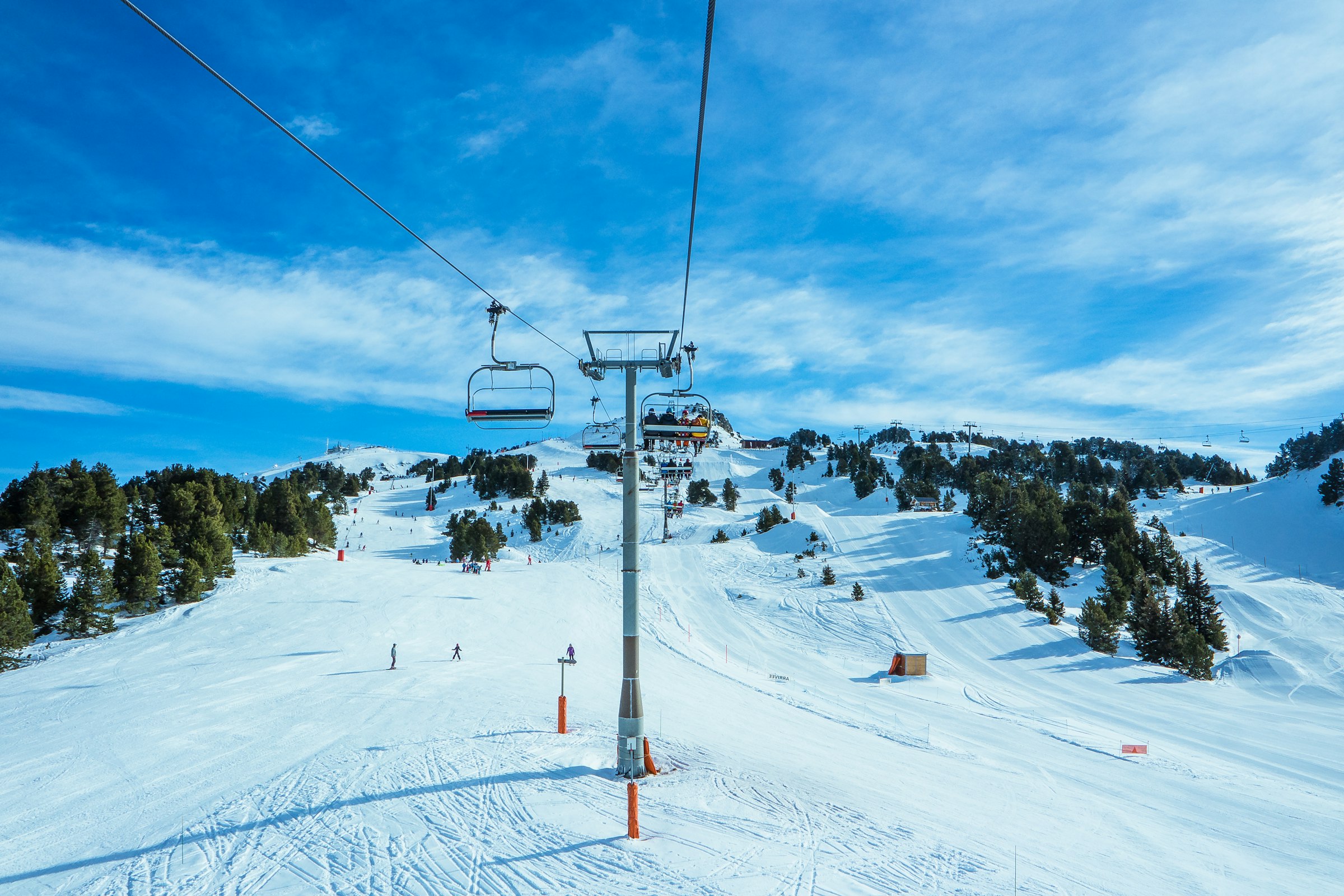
Chamrousse is located in the Belledonne range southeast of Grenoble, covering 13 km² between 1,384 and 2,440 metres. The resort offers over 90 km of downhill pistes, with 40 runs served by 24 lifts. One of these is a gondola that reaches the Croix de Chamrousse at 2,253 metres. Despite this, the permanent population is just 453 residents. This gap between residents and peak visitors is a key challenge for the resort: the infrastructure is built for busy winter weekends, but a small community manages it.
The resort has a notable Olympic history. Chamrousse hosted the alpine skiing events during the 1968 Winter Olympics, where Jean-Claude Killy won three gold medals in the men’s competitions. The women’s events took place at Recoin, two kilometres away. Fifty years later, Chamrousse was the site of a pilot project that reached its peak during the PyeongChang 2018 Winter Olympics. This connection between the two Olympic events is interesting to note.
Wise-IoT was a collaboration between the EU and South Korea, with Chamrousse serving as the leisure testbed. The pilot tracked skier flow and location throughout the ski area. It tested whether a resort could monitor where visitors are and how they move, using components that work together even if they come from different vendors and countries.
Managing a ski resort is all about distributing people across the mountain. Things like lift capacity, piste grooming, ski patrol, catering, and parking depend on knowing where guests are. Traditionally, resorts only get this information in summary form and after the fact, using lift-pass counts and sales receipts. This can lead to queues at one lift while another is empty, or crowded pistes while others are clear. Staff often rely on experience instead of real data. For a resort like Chamrousse, with 24 lifts, 90 km of runs, and only a few hundred residents, the gap between what operators know and what they need to know is important for both business and safety.
Localisation data helps close this gap. By knowing where skiers are in near real time, down to the level of a lift queue or a section of piste, operators can make informed decisions. They can choose which lift to open, where to send patrols, and when a car park is likely to fill up.
Wise-IoT focused on solving interoperability issues, not just sensing challenges. The project ran from 1 June 2016 to 31 May 2018, funded by the European Commission under Horizon 2020 (grant agreement 723156) with an EU contribution of €1,499,895.75 out of a total cost of €1,776,810.75, along with Korean funding for the Korean partners. EGM, based in France, coordinated the project. The main goal was to create a globally interoperable Internet of Things that could use many different IoT systems. This was achieved through morphing mediation gateways and trust-based recommendation systems, allowing services to work seamlessly across different systems and testbeds.
This approach explains why a French ski resort was included in the same project as Santander’s smart city and Korean testbeds. The idea was not that each pilot depended on the others, but that a service created for one could work on all of them. The project shared its results during the PyeongChang 2018 Winter Olympic and Paralympic Games, giving the leisure and mountain use cases a fitting stage.
Chamrousse was already moving toward similar goals on its own. In 2016, the same year Wise-IoT started, France named the resort an industrial demonstrator for sustainable cities. Later, in March 2020, Chamrousse signed a 25-year contract with ENGIE Solutions to become what is described as France’s first Smart Ski Resort. This includes a biomass heat network, solar panels, hydrogen and electric mobility, and a digital monitoring system that tracks energy flows in real time.
The pilot addresses four problems.
First, resorts manage skier flow without seeing it. Lift-pass data arrives aggregated and retrospective, so operators cannot act on congestion while it is happening.
Second, a small permanent community operates infrastructure sized for peak visitor loads. Chamrousse’s 453 residents run 24 lifts across 90 km of pistes, which puts a premium on deploying limited staff where they are actually needed.
Third, IoT deployments lock into their platforms. A service built for one vendor’s system typically has to be rebuilt to run on another, which makes replication between resorts, cities or countries expensive enough not to happen.
Fourth, cross-border federation raises trust and semantic questions. Data crossing between European and Korean testbeds must mean the same thing at both ends, and each side must have grounds to rely on the other’s information.
Tool — leisure IoT application
An application monitoring the flow and location of skiers across the Chamrousse ski area, giving operators visibility of where visitors concentrate and how they move through the resort.
Tool — semantic interoperability middleware
The project’s mechanism for translating between IoT systems that structure and label their data differently, so a service can consume feeds from platforms it was not written for.
Tool — data quality and reliability
A layer that lets services weigh the reliability of available information sources — necessary when data crosses independently operated testbeds in different countries.
Methodology — cross-border validation
Six testbeds across Europe and South Korea, federated to run smart city, leisure and healthcare pilots on shared components — so each application validated not only its own use case but the claim that services transfer between platforms.
Methodology — social-technological alignment
FHNW led the project’s social-technological alignment work, coordinating a shared understanding of what global IoT systems need to deliver and building the SAR service to monitor and validate those requirements against what the pilots actually did.
Completed
The project ran ski resort field trials, which its deliverable record confirms, putting the skier-flow and localisation application in front of real users on a working mountain rather than in a laboratory.
It federated six testbeds across Europe and South Korea, demonstrating smart city, leisure and healthcare services on a common semantic layer — the leisure pilot at Chamrousse being one instance of a portable service rather than a bespoke resort system.
It delivered the semantic interoperability components the approach depends on: the morphing mediation gateway with management and configuration functions, semantic reasoners, IoT platform integration across successive releases, and an end-to-end security framework.
It timed its dissemination to the PyeongChang 2018 Winter Olympic and Paralympic Games, giving the mountain and leisure use cases an international audience at the moment they were most legible.
Quantitative outcomes for the Chamrousse trial are not publicly documented.
To provide the best experiences, we use technologies like cookies to store and/or access device information. Consenting to these technologies will allow us to process data such as browsing behaviour or unique IDs on this site. Not consenting or withdrawing consent may adversely affect certain features and functions.