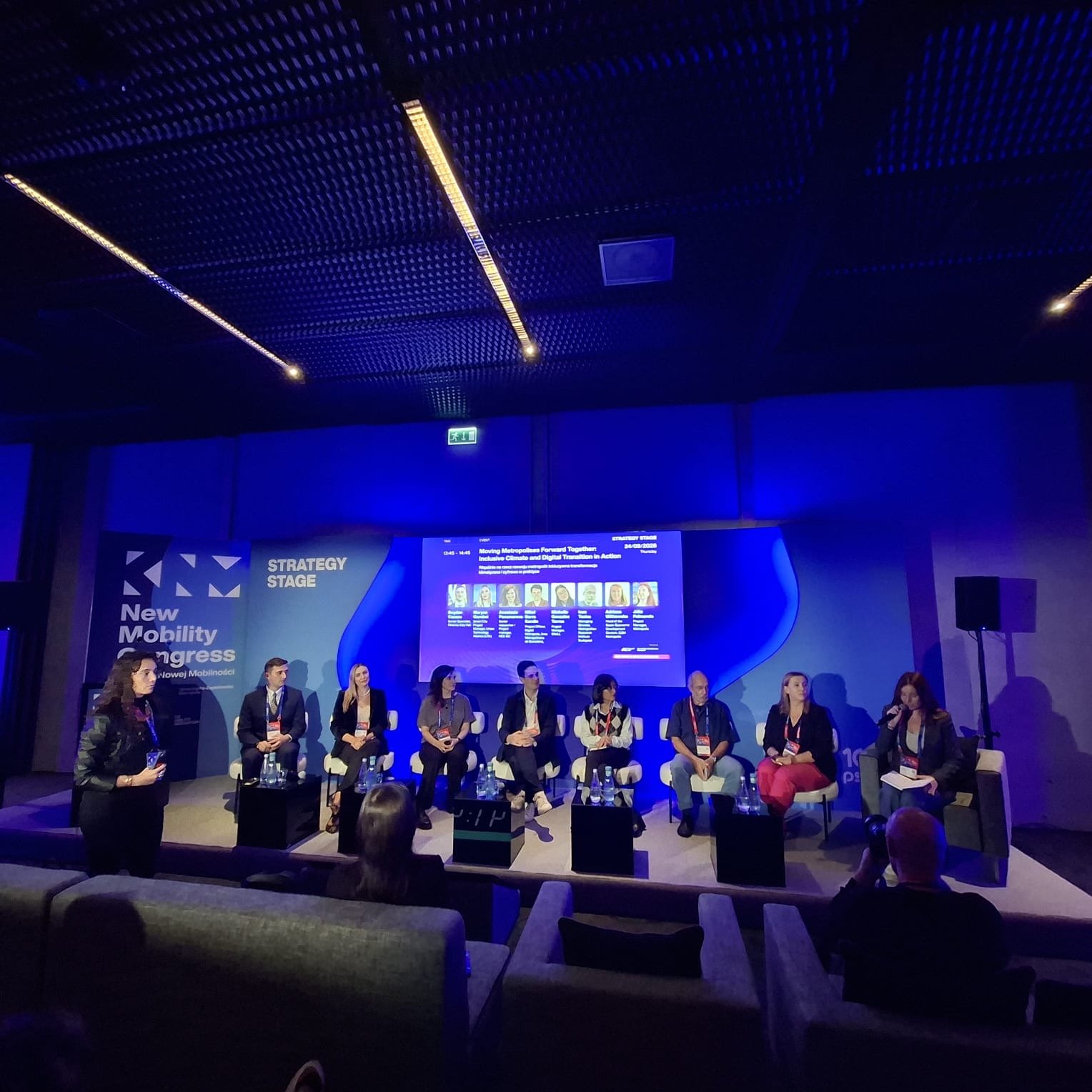
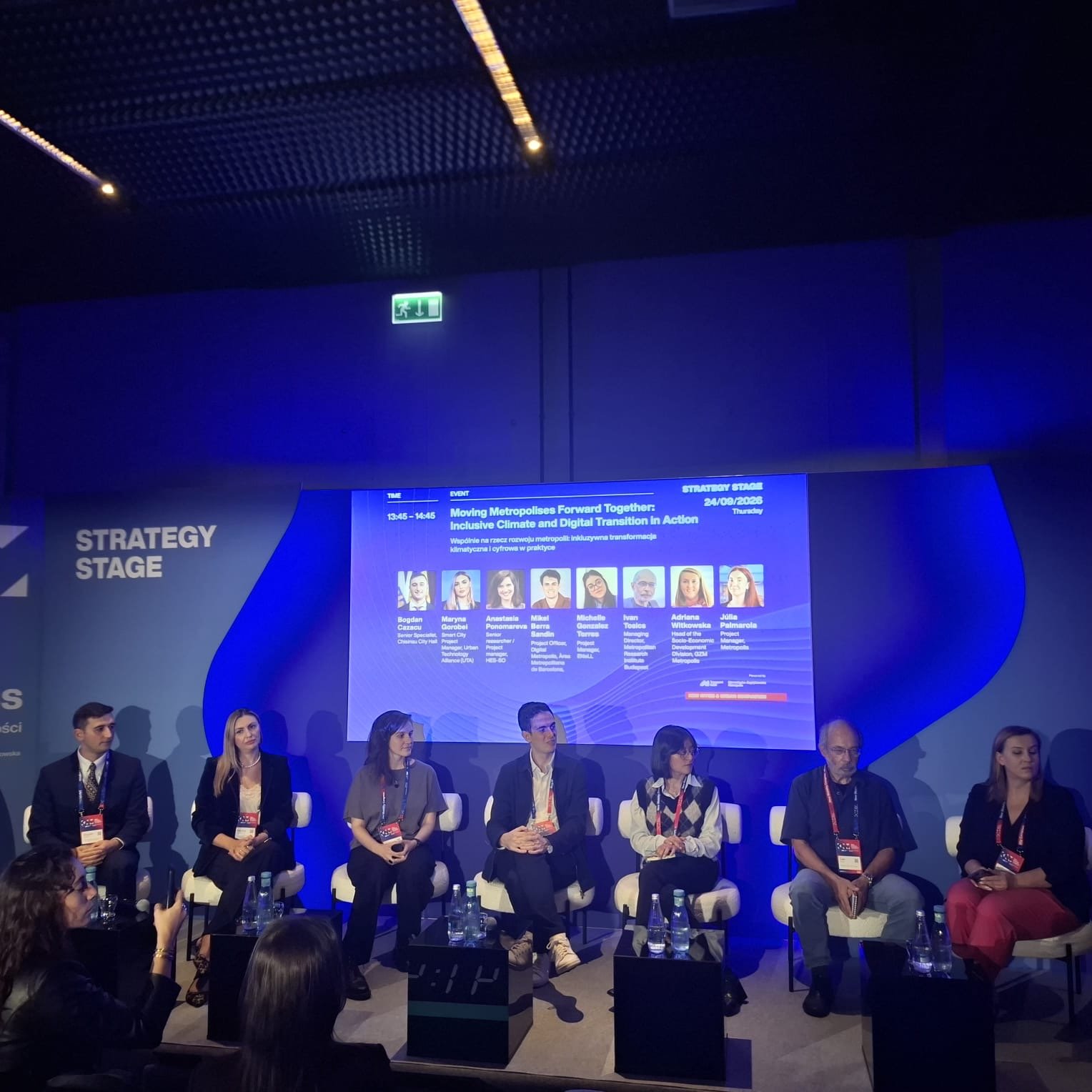
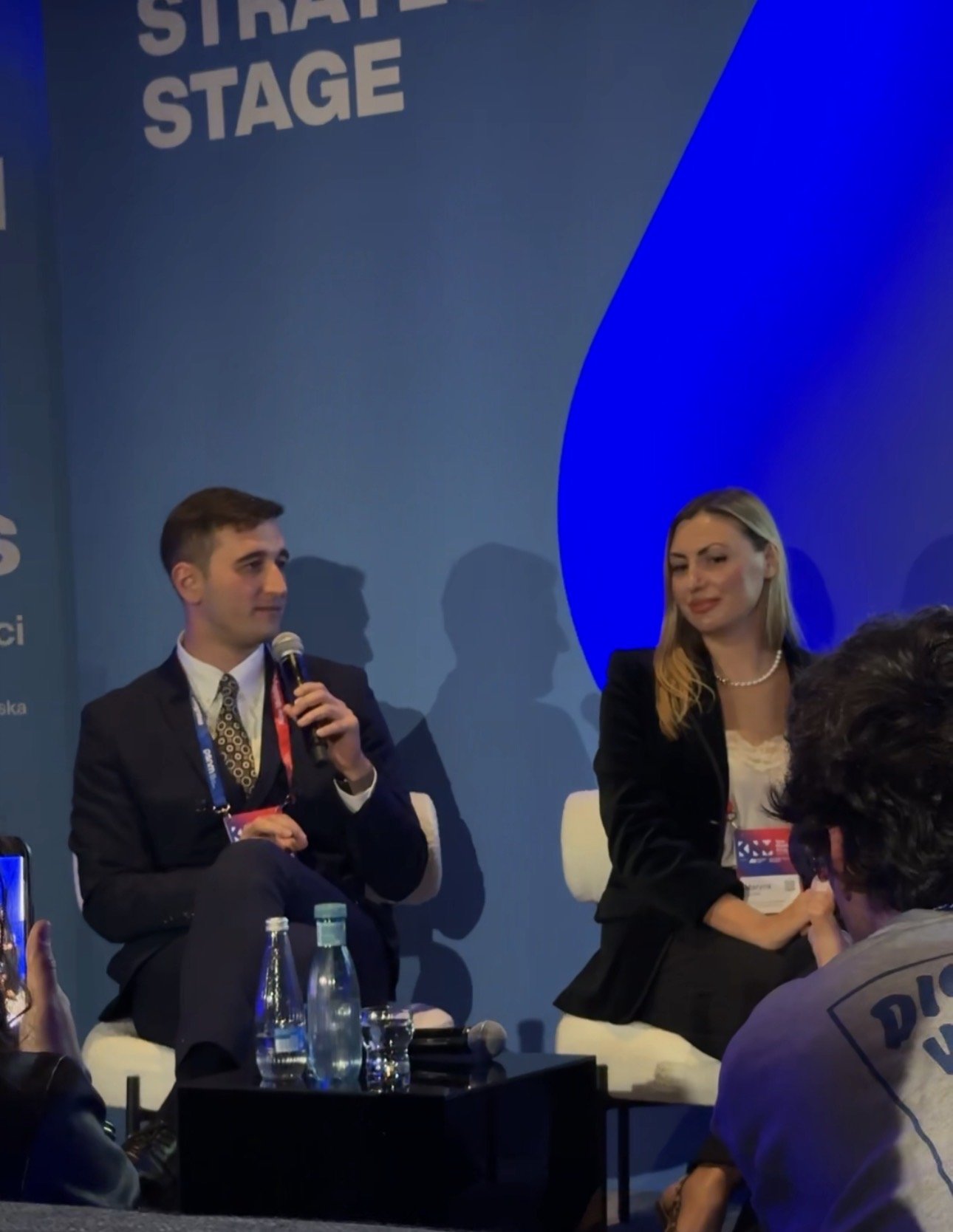
On 24 September 2026, Dr Maryna Gorobei, Smart City Project Manager at the Urban Technology Alliance (UTA), spoke on the Strategy Stage of the New Mobility Congress in Katowice. Asked how metropolitan areas can turn governance, participation and capacity into an actionable roadmap rather than another strategic document, she set out what it takes to move from ambition to implementation.
The New Mobility Congress: mobility, cities and transition
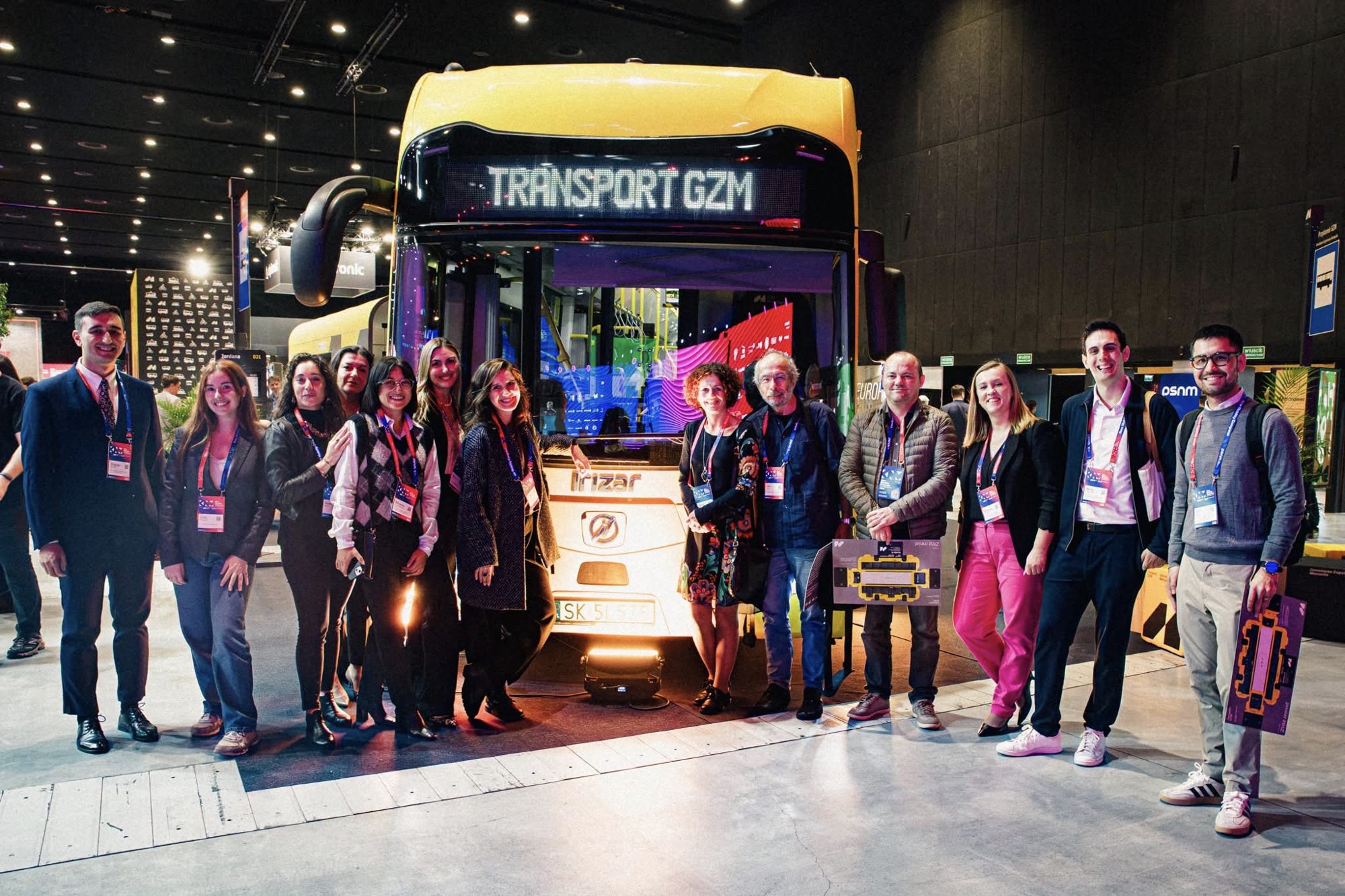
The New Mobility Congress (Kongres Nowej Mobilności) took place from 23 to 25 September 2026 at the International Congress Centre in Katowice. Its programme spans mobility and transport, cities and urban innovation, energy and infrastructure, climate policy and the economy.
UTA took part in the panel “Moving Metropolises Forward Together: Inclusive Climate and Digital Transition in Action”, moderated by Júlia Palmarola of Metropolis. The session started from a shared premise: climate change and digital transformation confront metropolitan areas with challenges that no single institution can solve alone. Representatives of Àrea Metropolitana de Barcelona, Metropolia GZM and Chișinău City Hall opened with concrete challenges from their own territories, before contributors from the Metropolitan Research Institute, ENoLL, HES-SO and UTA reflected on coordination, participation, capacity and implementation.
From strategy to implementation pathway
Maryna Gorobei was given the question that drew these threads together: after governance, participation and capacity, how do you turn all of this into an actionable metropolitan roadmap rather than another strategic document?
Her answer began with the difference between the two. A strategy can describe a vision and set long-term goals. A roadmap has to translate that ambition into an implementation pathway, making clear who does what, when, with whom, with which resources and under what conditions.

Why metropolitan governance matters
This matters particularly at metropolitan scale, she argued, because responsibility is rarely concentrated in one institution. Mobility, climate adaptation and waste management do not stop at municipal boundaries; delivering them can depend on several municipalities, administrative levels, transport operators, businesses and civil society. Even when the strategic objective is clear, implementation can stall if ownership, coordination and dependencies are not defined.
Four ingredients of an actionable roadmap
She identified four things an actionable roadmap needs: priorities, because not everything can happen at once; ownership, because every action needs someone responsible for moving it forward; sequencing, because actions depend on one another; and feedback, because metropolitan transitions are not linear.
Sequencing, she stressed, means distinguishing enabling actions from those that follow. Setting up a governance mechanism, collecting the right data, securing political agreement or identifying funding often has to come first, before other actions become possible.
She also challenged the idea of a roadmap as a finished product. In her words, a roadmap “should not be treated as a fixed document that’s approved once and then put on the shelf. It should be a living management tool”, in which progress is reviewed, risks and bottlenecks are identified, and actions are adjusted as conditions change.
New Mobility Congress takeaways for metropolitan authorities
Drawing on the roadmap work she supports with metropolitan authorities in the Horizon Europe project MICAD, she noted that the value does not lie only in the final document: developing a roadmap together already forces the actors involved to clarify priorities, dependencies and realistic next steps.
For cities and metropolitan authorities, the implication is that the hardest questions – who owns an action, what must happen first and how progress will be reviewed – need answers while the roadmap is being written, not after it has been approved. Her test of a good roadmap was deliberately simple: after reading it, the actors involved should know what happens next, who needs to act and what has to be in place for that action to succeed.
Why it matters beyond MICAD
The argument reaches well beyond roadmap writing. The Congress programme covered mobility, energy, infrastructure and climate policy – fields in which delivery depends on the same chain of actors she described: municipalities, metropolitan bodies, transport operators, businesses and civil society, none of which controls the whole system. For public authorities, operators and companies alike, her point was that a clear objective is not enough: projects stall where no one owns the next step, where enabling conditions are missing, or where progress is never reviewed.
This is the space in which UTA works. As an association connecting cities, technology providers, researchers and innovators, UTA operates at the interface between metropolitan authorities and technology, between governance and experimentation, and between climate and digital transition. Within MICAD, it co-coordinates the roadmap work with the metropolitan authorities of Barcelona, Milan, GZM, Tirana and Chișinău, where these questions are now being tested in practice.