🔄 Ongoing
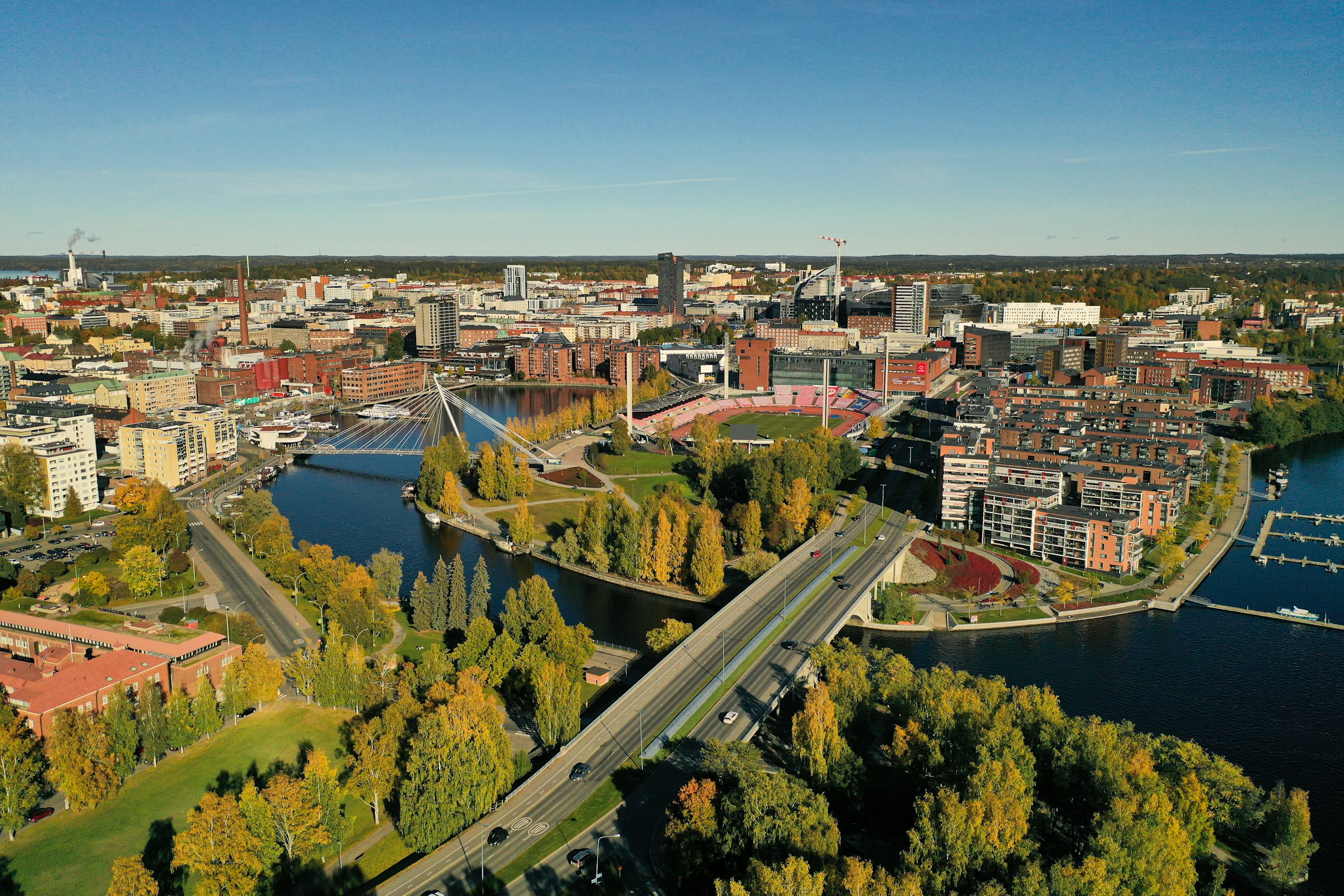
Tampere is testing how automated public transport and smart energy solutions can make urban growth more sustainable, with flexible first- and last-mile connections, mobility services for older residents and bi-directional vehicle charging.
To use limited urban space more efficiently while maintaining quality of life, shift trips from private cars to public transport, walking, cycling and shared mobility, and link mobility planning with energy systems and urban development.
City of Tampere and Business Tampere: pilot city and local partner.
The Lisbon Council: Urban-Flow coordinator.
Kentyou and Latitudo 40: UTA members and Urban-Flow partners.
Urban-Flow is a four-year project that started in January 2026 and was launched in Valencia. It supports cities in rebalancing public space and mobility through local digital twins and City Living Labs that involve policymakers, citizens and local stakeholders. Valencia, Florence and Tampere are the lead cities, and Brussels, Plzeň and Edinburgh are replicant cities.
Tampere is Finland’s third-largest city, with more than 240 000 residents. Its population grows by about 1.4% a year, adding more than 3 000 residents and more than 10 000 weekday trips annually, and nearly half of trips are made by car. The city has built a smart city ecosystem on open platforms, open data and digital services, and aims for carbon neutrality by 2030.
Automated public transport for flexible first- and last-mile connections, with demand-responsive and smart mobility services, including services for older residents.
Bi-directional charging, where electric vehicles act as temporary grid storage. This is at an early stage, with a limited number of compatible vehicles.
Local digital twins, real-time and open data platforms, and the Tampere.Finland app for citizen-facing information and mobility choices.
Better multimodal transport, more efficient use of urban space and support for the city’s carbon neutrality goal.
Ongoing
To provide the best experiences, we use technologies like cookies to store and/or access device information. Consenting to these technologies will allow us to process data such as browsing behaviour or unique IDs on this site. Not consenting or withdrawing consent may adversely affect certain features and functions.