✅ Finalized
⇨
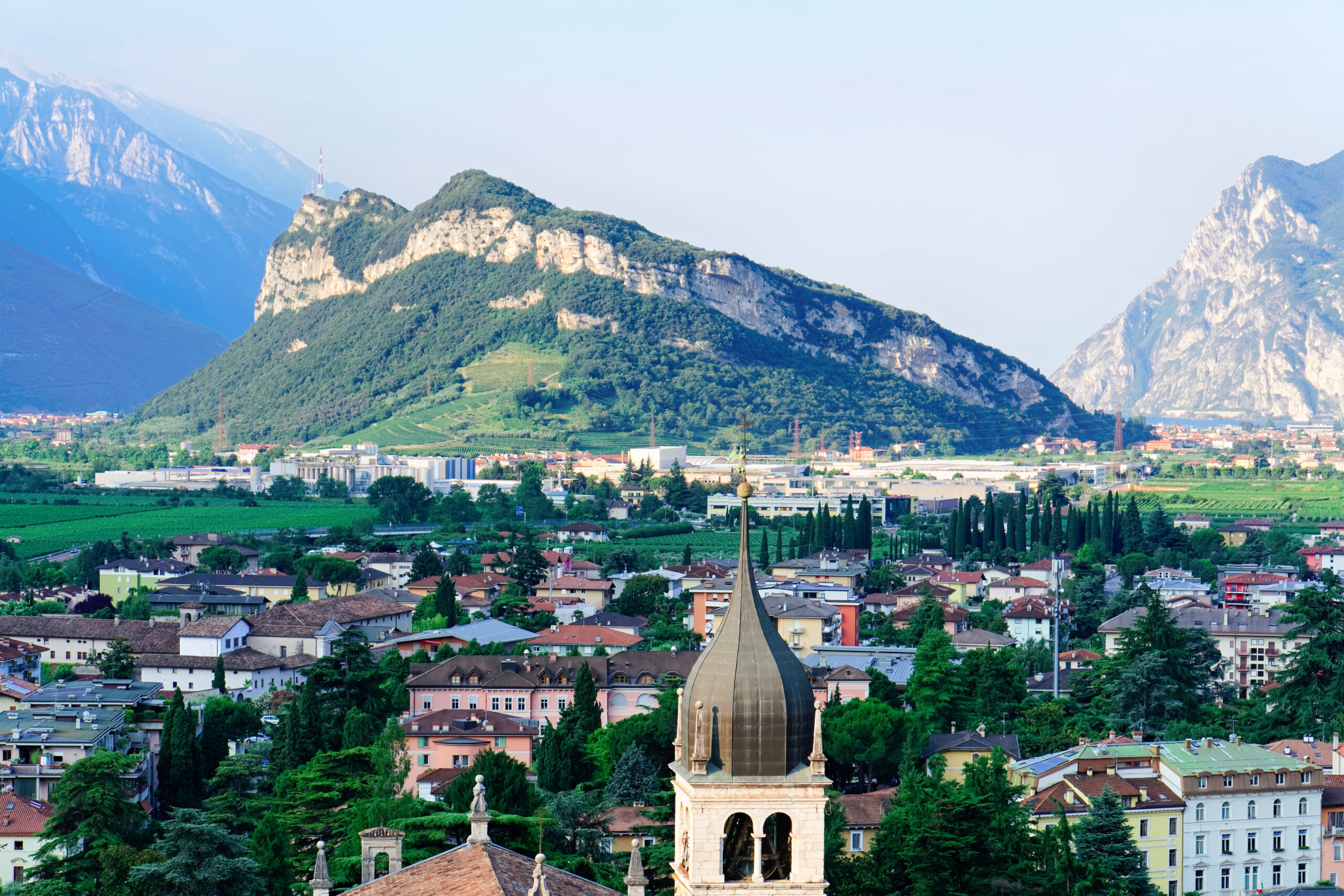
Trento is a mid-sized city in northern Italy with a strong background in smart-city research, much of it led by FBK, the local research foundation. From 2018 to 2021, the Municipality of Trento hosted an urban pilot for DECENTER. DECENTER was a Horizon 2020 project coordinated by FBK as part of EU–Korea research cooperation. It aimed to build a fog computing platform that processes data close to its source using AI-driven orchestration. In Trento, the team used this platform to tackle road safety at pedestrian crossings.
Pedestrian crossings are among the most dangerous points in any city’s road network. Pedestrians are now more easily distracted than ever, with information reaching them from many different sources. City authorities are increasingly concerned about people who look at their smartphones while crossing.
The pilot equipped two intersections in Trento with standard, market-available cameras. These monitor people approaching and using the crossings. AI models on edge devices beside the road analyse the video locally. They identify pedestrians and vehicles, notice distracted behaviour and flag possible dangers so the system can send alerts.
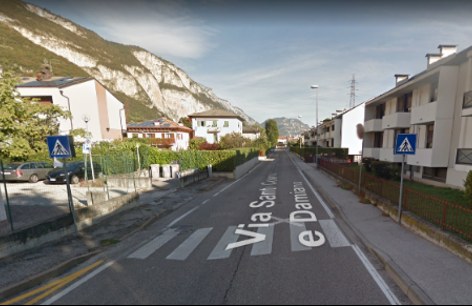
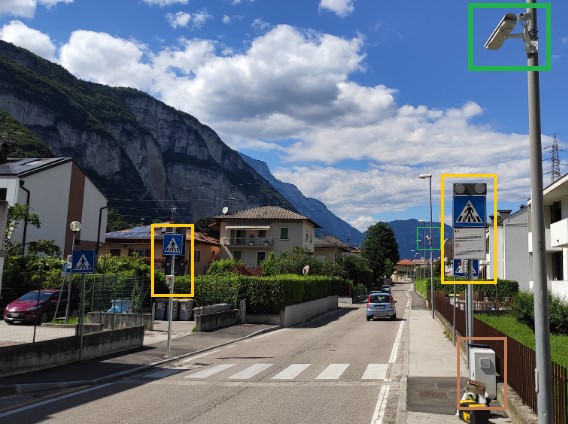
All processing takes place at the edge, not in the cloud. The system extracts only the important safety events, anonymises the data and never sends raw video to central servers. This approach lowers latency, uses less bandwidth and protects citizens’ privacy by default.
The team built the solution on Eclipse sensiNact, Kentyou’s open-source IoT platform. Eclipse sensiNact linked the cameras and edge nodes, and DECENTER’s orchestration layer managed computing resources from the cloud to the edge. An AI model repository let operators update models at every intersection automatically, without visiting the site. A digital twin of each crossing, updated in real time, gave operators a live view of street activity.
Watch the Trento smart-crossing pilot in action:
Crossings are high-risk areas. Pedestrians and vehicles share the same space, and a brief moment of inattention from either side can cause a serious accident.
Distraction is difficult to spot. Pedestrians focused on their phones may step into the road without looking for traffic. Traditional traffic systems cannot detect or respond to this behaviour.
Video monitoring raises privacy concerns. Cameras are needed to detect risky behaviour. However, sending footage of people to central servers creates data-protection risks and can lead to public distrust.
Cloud processing is too slow and resource-intensive. Safety alerts must arrive within fractions of a second. Sending video to the cloud increases latency, uses a lot of bandwidth and makes a city-wide rollout expensive.
Managing AI across many sites is complicated. Each new intersection means more hardware and models to deploy, monitor and update, which quickly becomes unmanageable without automation.
The pilot also used several of DECENTER’s core features: resource orchestration, privacy-preserving AI, hierarchical and distributed AI, a digital twin, an AI model repository and a multi-tier fog computing platform.
DECENTER benefits: before and after
| Aspect | Before | After |
|---|---|---|
| Video processing | Video streams went to the cloud for processing. | The system processes video at the edge and sends only anonymised data onward. |
| Resource management | Operators managed computing resources separately at each layer. | The DECENTER fog platform manages resources seamlessly from cloud to edge. |
| AI model updates | Operators deployed and updated AI models by hand. | The system pulls models automatically from the AI model repository. |
| Alert latency | Alerts depended on a round trip to the cloud. | Edge services deliver alerts much faster. |
| Situational awareness | Operators had no live picture of the crossing. | A digital twin shows the pedestrian crossing in real time. |
Completed. DECENTER closed in June 2021 with a working prototype in Trento.
A working prototype on real streets. The team deployed and ran edge-AI road-safety detection at two active intersections in Trento, not only in the lab.
Privacy by design. The system processed all video at the edge and sent no sensitive data to the cloud. This showed that cities can monitor safety without centralising footage of citizens.
Faster and lighter than the cloud. Edge processing reduced latency and bandwidth use, so alerts arrived quickly enough to make a difference.
Simpler operations at scale. Automated orchestration and the shared model repository let operators update AI models across sites without manual work. This makes a city-wide rollout realistic.
A foundation for transatlantic expansion. The Trento pilot became the starting point for FedIntersect, which brings the approach to Santander and New York City.