Context
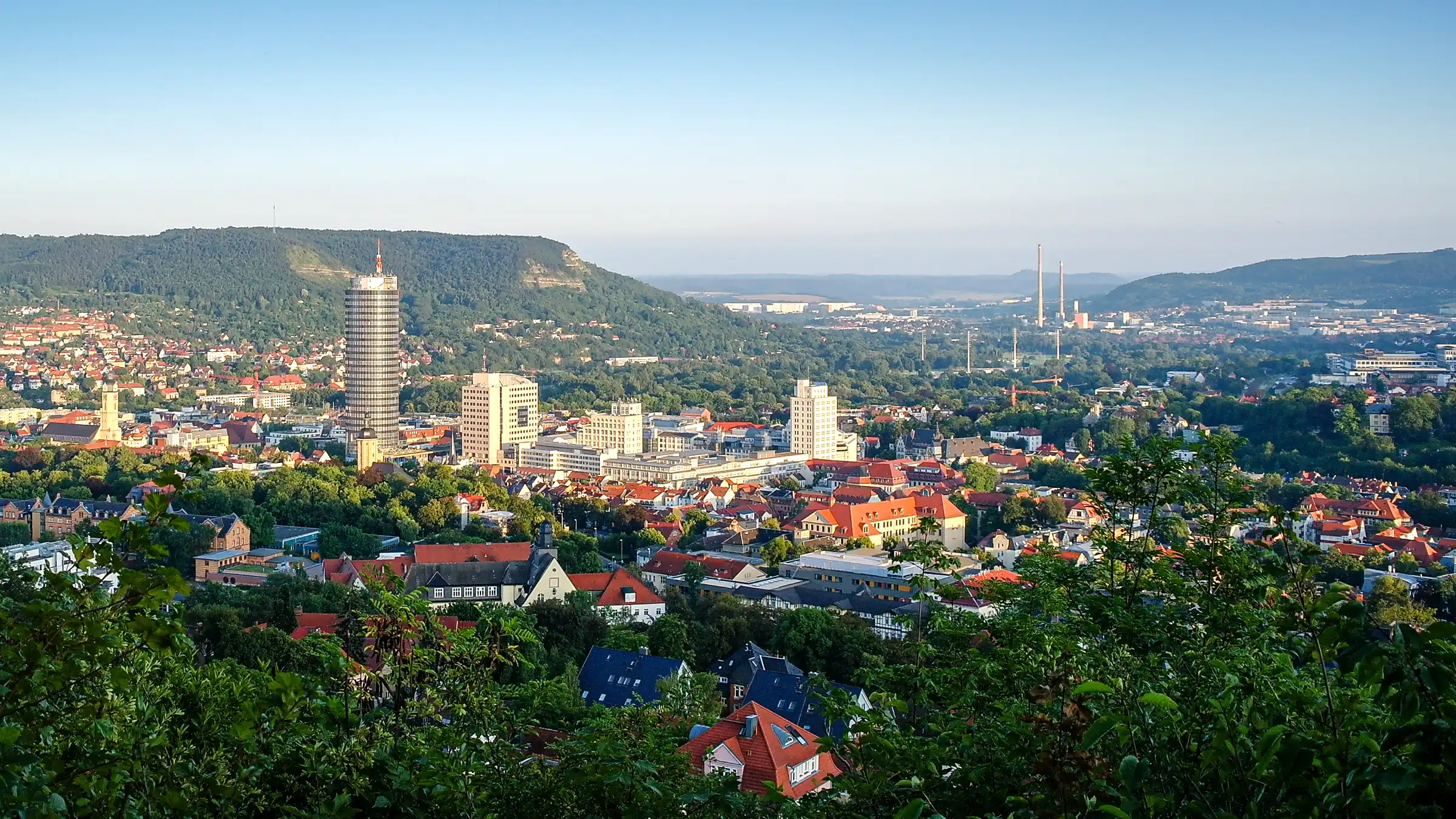
Jena is a city of about 111 000 inhabitants in Thuringia, Germany. Its urban data comes from many sources: municipal databases, sensor networks, public transport control systems, traffic signal infrastructure and open geodata.
Specific problem
Urban data in Jena was spread across incompatible systems: municipal databases, proprietary sensor platforms, public transport control systems and ad hoc open-data sources. There was no unified access layer, no common governance framework and no semantic interoperability between them, so each new data source or service needed its own separate integration.
Much of the data is personal or sensitive, so any shared use has to meet GDPR requirements, and the quality and meaning of data differ from one source to the next.
Current situation and gap
The challenge was not only technical integration. The city needed a sustainable data infrastructure, operated by the city itself, that could grow as new data sources and use cases appeared without creating new vendor dependencies.
Such an infrastructure also had to work with German and European data standards, so that data could be shared and reused beyond the city’s own systems.
Specific need
Jena needs a unified, standards-based urban data infrastructure, operated under the city’s own control, that connects sensors, municipal IT systems, public transport and open data sources and complies with GDPR.
Expected outcome
– An open, standards-based data platform running on city-owned infrastructure, which brings heterogeneous data sources into one interoperable data space.
– The platform should give unified access to sensor and municipal data through open interfaces; manage data as versioned, validated models so that quality and meaning stay consistent; apply privacy rules by role and keep an audit trail for personal and sensitive data; publish open data automatically in standard catalogue formats; and scale and be monitored in day-to-day operation.
– Unified, interoperable access to city data from different sources, a standards-compliant open data catalogue, and data governance that supports GDPR compliance.
Who would use the results
Municipal departments and operators, for operational monitoring and planning in areas such as energy, transport and environment, and the public and researchers through open data.
Expected impact
Could reduce data silos in the city administration, make it easier to add new data sources and services over time, and keep control of city data with the city rather than with individual vendors.
Space. Jena, using the city’s existing sensor networks, public transport (bus and tram) data, traffic signal infrastructure and open geodata.
Scale. City scale.
Data. Existing assets include municipal databases, IoT sensor networks, public transport telemetry, traffic signal infrastructure with traffic count detectors, and open geodata. Unified data streams, open data catalogue entries and audit records can be generated during experimentation.
Constraints. Solutions must comply with GDPR, avoid new vendor dependencies and align with German and European data standards and with the national technical guideline for smart city data infrastructure.
Get in touch to express your interest or explore how you can contribute.