Context
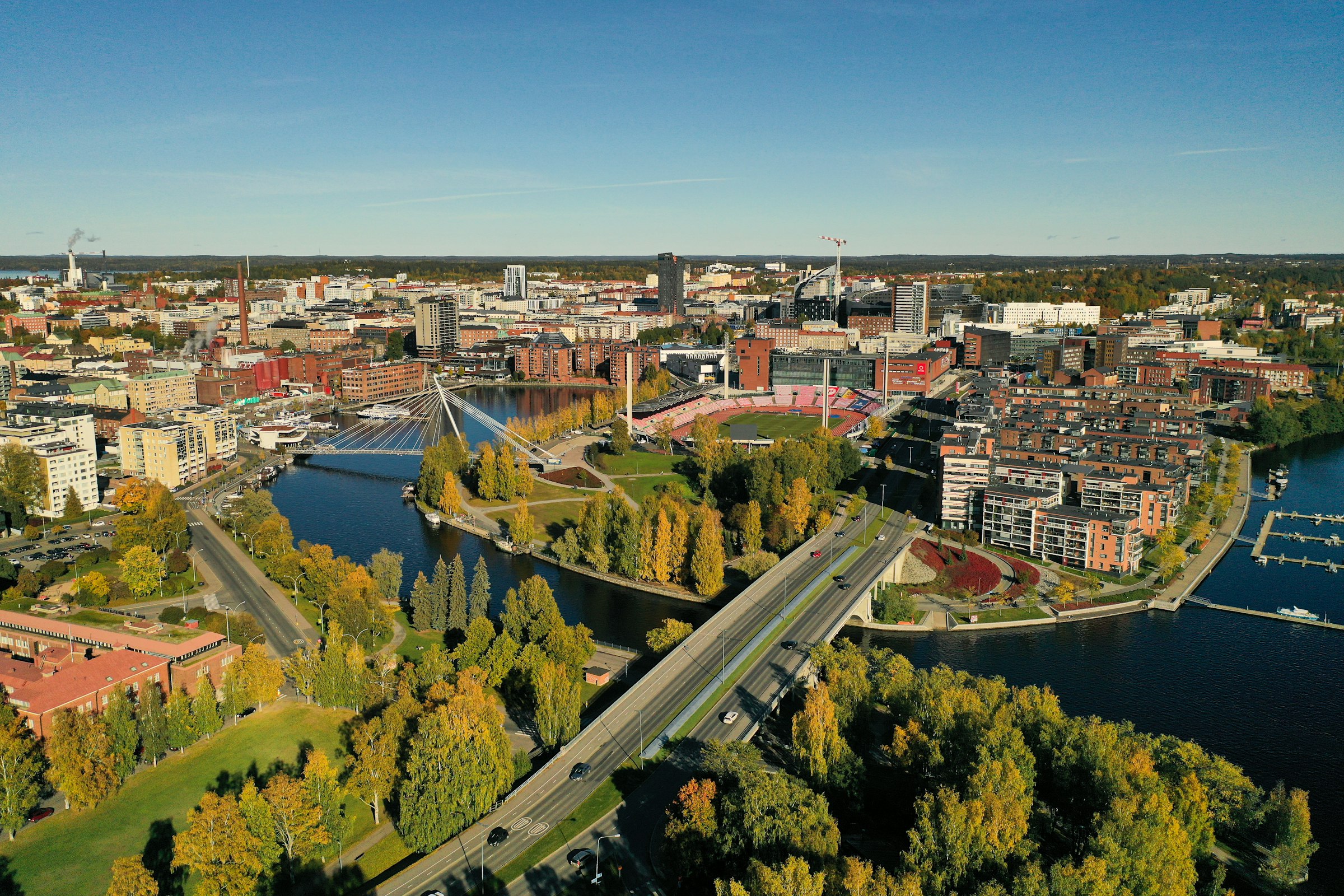
Tampere is Finland’s third-largest city, with more than 240 000 residents. Its population grows by 1.4% a year, adding more than 3 000 residents annually and creating more than 10 000 additional daily trips. Nearly 50% of trips are made by car. The city aims to reach climate neutrality by 2030.
The city is looking at the district of Hervanta, and at the connections between its neighbourhoods and the existing tram network, as a place to make mobility more inclusive, efficient and environmentally sustainable.
Specific problem
Older residents and people with accessibility needs face barriers to travelling independently, for example to healthcare appointments. Planning a trip means understanding information, comparing options and using digital tools. Walking distances, costs and the availability of support from relatives or accompanying services all shape travel choices, and last-minute taxi cancellations can leave people without a way to travel.
The journey can feel stressful for people with limited mobility, who may need help boarding or worry about finding a seat, and a lack of confidence can be as significant a barrier as the physical journey. The final connection to the destination, such as finding the right pick-up point at a hospital, and the return trip are hard to organise, so many people continue to rely on healthcare staff or other help.
Current situation and gap
The barriers go beyond transport availability. Accessibility, confidence, service reliability, ease of access to information and personal support all determine whether older residents can travel independently, and travel today often depends on ad hoc support rather than a seamless service across the whole journey.
The city also lacks reliable data to measure transport emissions and assess the real impact of mobility policies, and is exploring how electric and autonomous mobility can be integrated into existing transport services.
Specific need
Tampere needs accessible, inclusive first- and last-mile mobility for older residents and people with accessibility needs, integrated with its public transport system, while reducing transport-related emissions as the city grows.
Expected outcome
– An assisted-mobility service that combines public transport, electric and autonomous mobility solutions, simple digital tools and a coordinated, community-based volunteer support network, supported by smart energy solutions such as bi-directional (vehicle-to-grid) charging.
– The service should support the whole journey, from leaving home to returning, and let assistance be activated only when needed. It should offer simple interfaces for journey planning, assistance requests and travel updates that suit users with limited digital confidence, strengthen rather than replace existing public transport, and coordinate users, volunteers, transport operators and digital platforms through interoperable services.
– A working assisted-mobility service in the district, with data to monitor and evaluate accessibility, service use and transport emissions.
Who would use the results
Older residents and people with accessibility needs as users, and volunteers and local organisations as support. The city and transport operators will use it to coordinate services and to evaluate mobility policy.
Expected impact
Could help older residents travel more independently and confidently, make public transport more effective at a contained operating cost, and give the city better data on transport emissions as it grows.
Space. Hervanta district, including the connections between its neighbourhoods and the tram network.
Scale. District scale.
Data. Open city data, transport information, IoT infrastructure and demographic data can support monitoring and evaluation. Data on assistance requests, journeys and emissions can be generated during experimentation.
Experience. Tampere has previous experience in smart city innovation, digital twins and autonomous mobility.
Get in touch to express your interest or explore how you can contribute.