E-Health Services in the Edge-Cloud Continuum – Athens

✅ Finalized

📍 Athens, Greece

About

🗓️ Start: 2024-06-01

⇨

🗓️ End: 2025-12-31
The pilot tested an edge–cloud telemedicine platform bringing real-time health monitoring and rapid emergency response to remote technical workers operating in difficult or isolated environments. The real-customer context was a company that sets up and services wind turbines: hundreds of its workers are based on construction sites in rural and remote areas with limited connectivity, which makes health and safety monitoring difficult. The solution combined portable telemedicine units, wearable devices and edge processing to deliver secure, real-time patient monitoring without depending on a constant link to a central system, and, in emulation with simulated devices, the approach was shown to scale to hundreds of sites across Europe.

Short Description

The pilot tested an edge–cloud telemedicine platform bringing real-time health monitoring and rapid emergency response to remote technical workers operating in difficult or isolated environments. The real-customer context was a company that sets up and services wind turbines: hundreds of its workers are based on construction sites in rural and remote areas with limited connectivity, which makes health and safety monitoring difficult. The solution combined portable telemedicine units, wearable devices and edge processing to deliver secure, real-time patient monitoring without depending on a constant link to a central system, and, in emulation with simulated devices, the approach was shown to scale to hundreds of sites across Europe.

Key goal or objective

To validate a scalable, secure edge–cloud health-monitoring platform giving remote and rural workers reliable access to medical care and emergency response, and to prove the approach can scale to many sites at once without added complexity.

Pilot participants

TMA (trial lead); ATOS, Siemens, CYSEC, Kentyou, I2CAT and EBOS (technology partners) — COGNIFOG project (Horizon Europe)

Pilot Overview

Workers on remote construction sites, such as those installing and servicing wind turbines, are often based in rural areas, far from conventional healthcare infrastructure and without reliable connectivity. The pilot addressed this by combining portable telemedicine units (‘suitcases’) equipped with medical-grade sensors and video-consultation tools, wearable smartwatches for continuous vital-sign tracking, fall detection and SOS alerts, and a secure cloud platform linking it all to medical staff.

Rather than depending on a constant connection to a distant server, health data is captured and processed close to the worker, at the site office, and only what is needed moves onward to the cloud. This kept the system responsive even in connectivity-constrained locations, and allowed the trial to test something conventional telemedicine set-ups rarely need to prove: that the same architecture could scale from a single construction company to an EU-wide operation without straining the central infrastructure.
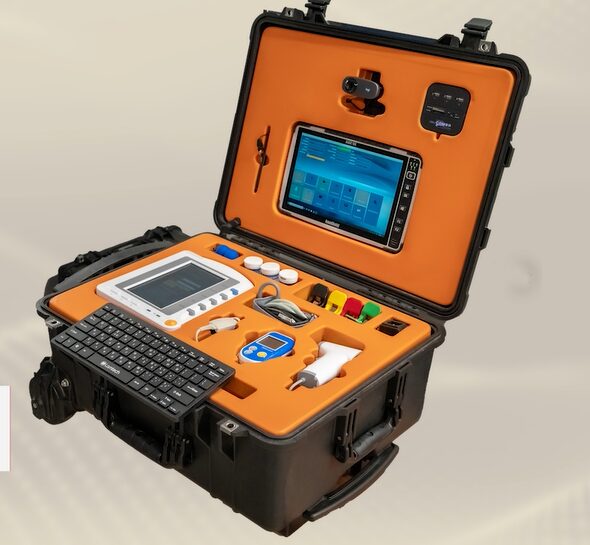
Portable telemedicine unit for remote e-health services

Challenges Addressed

Relevant UTA challenge: Public health and remote/rural healthcare access

  • Continuous health and safety monitoring in remote locations: workers in rural areas, often exposed to physical hazards, need reliable monitoring without depending on constant connectivity.
  • Rapid emergency response: when something goes wrong, telemedicine-enabled first response needs to happen immediately, not after a delay.
  • Supporting many different devices and platforms at once: wearables, portable units and gateways of different hardware types needed to work together reliably.
  • Proving the platform could scale before relying on it: the system needed to be tested against realistic, much larger volumes of sites and devices than a single pilot site would show.

Solutions Tested

Relevant UTA solution: Edge–cloud computing for healthcare and remote patient monitoring
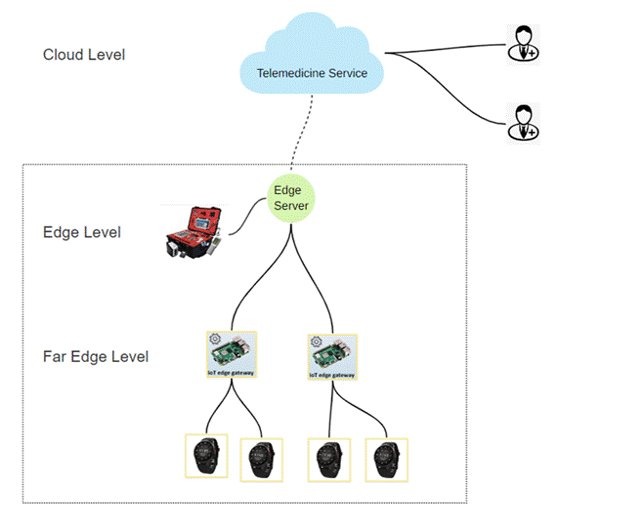
  • A three-level edge-to-cloud architecture, connecting wearable devices at the far edge, a site-office edge server and a secure cloud telemedicine platform.
Edge-cloud architecture for remote telemedicine
  • Portable telemedicine units (‘suitcases’), deployed on site with medical-grade sensors and video-consultation capability for remote assessment.
  • Wearable smartwatches, tracking vital signs, fall detection and SOS alerts in real time.
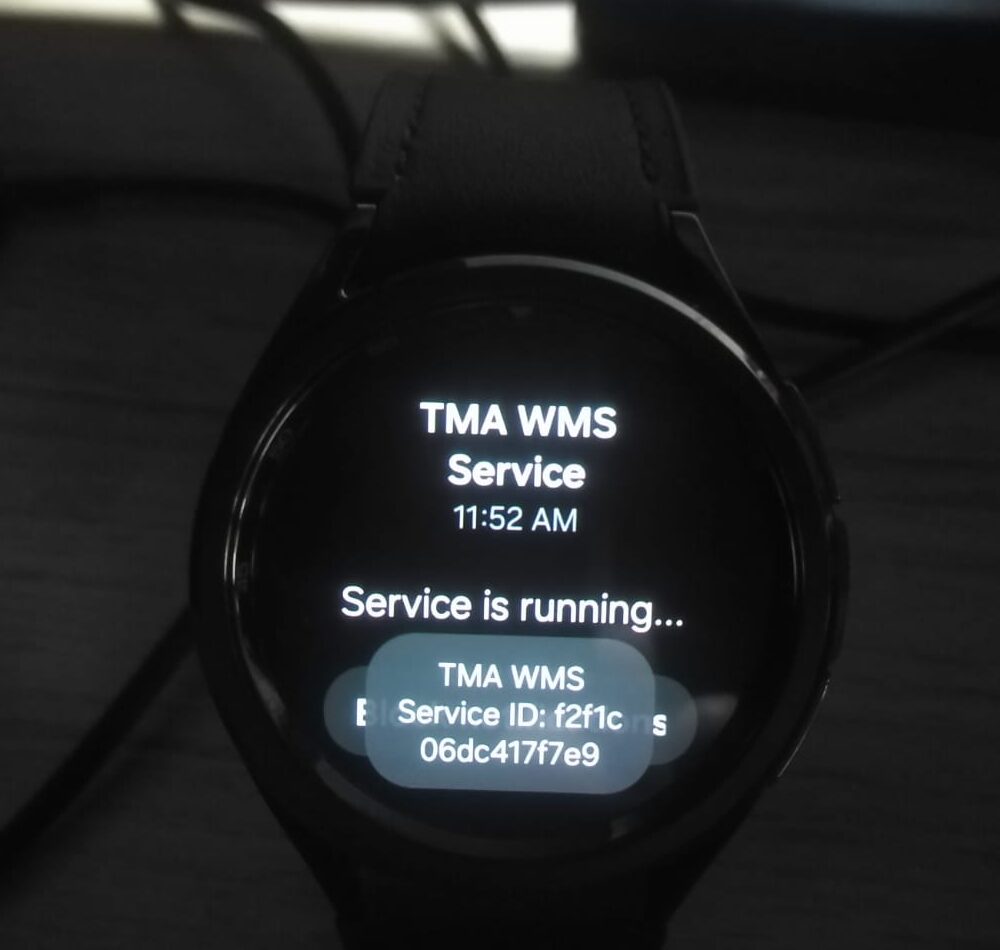
Smartwatch used for real-time health monitoring
  • Edge-level data processing at the site office, aggregating and pre-processing data before anything moves to the cloud.
  • A secure cloud-based telemedicine platform, letting medical staff review records and hold video consultations remotely.
  • Automated infrastructure deployment, so the platform could be set up consistently across many sites with minimal manual effort.
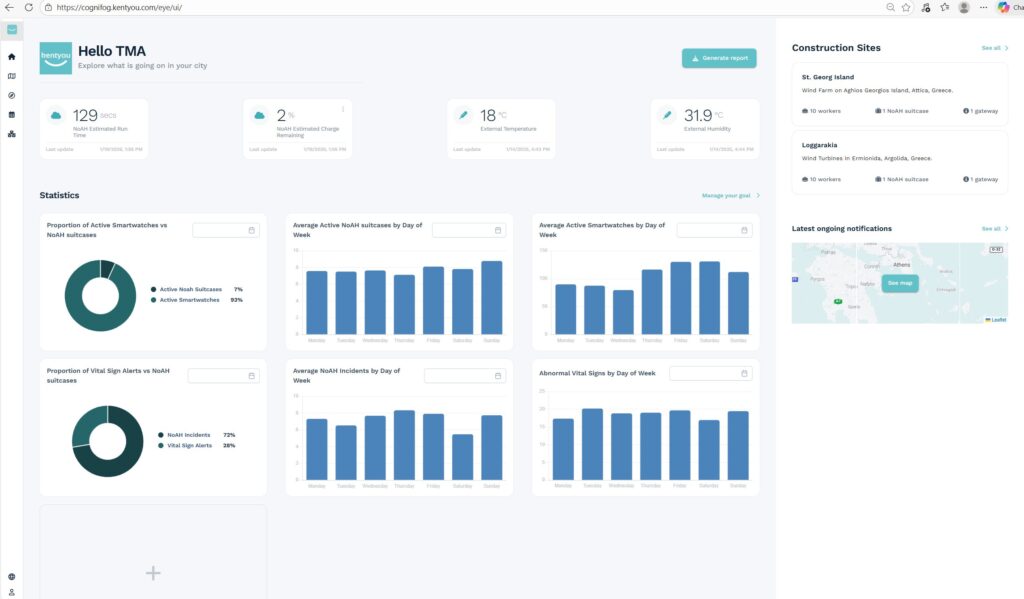
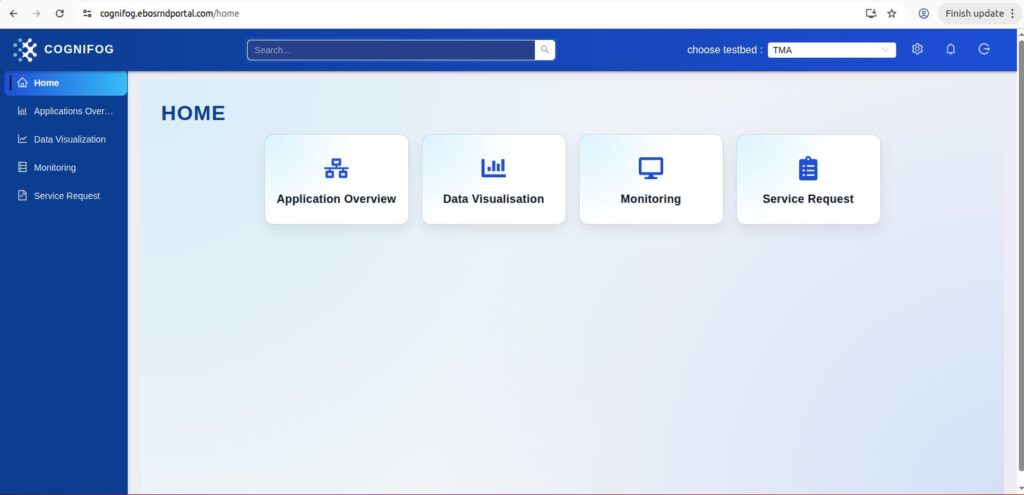
  • Real-time monitoring and visualisation through Kentyou Eye, providing a unified view of connected devices, infrastructure status and operational data across the distributed e-health environment.
Kentyou Eye monitoring of distributed e-health devices
  • Scalable, multi-site deployment, validated across hundreds of construction sites without added central complexity.

Current Status

Completed

Achieved Results

Key aspects that have been tested and demonstrated: edge-based health-data processing, wearable and portable device integration, automated multi-site deployment and large-scale scalability for remote telemedicine.
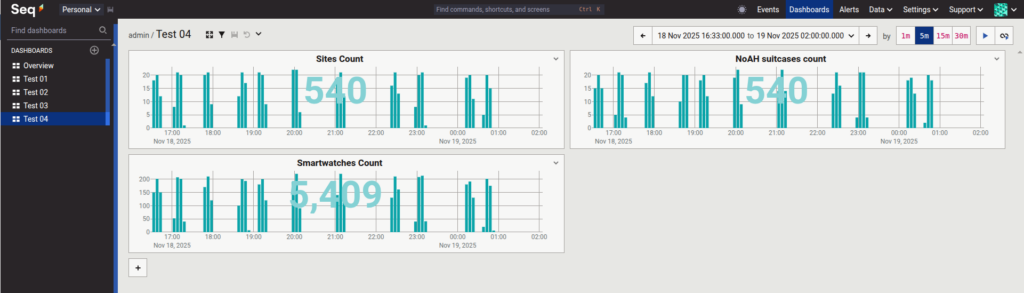
  • Scaled, in emulation, from 10 construction sites to 540 sites spanning all 27 EU countries, representing 5 400 workers, 540 telemedicine suitcases and 5 400 smartwatches, without affecting the central cloud infrastructure.
  • Total power consumption cut by approximately 75% compared with the legacy set-up, by replacing multiple high-power servers with one central cloud server and a lightweight edge server per site.
  • An estimated 75% reduction in associated CO₂ emissions, based on continuous year-round operation.
  • Stronger data privacy, since most health data is processed at the edge rather than sent to the public internet or a central cloud.
  • No drop in service quality as the system scaled: monitoring and response remained smooth under load.

EBOS operational dashboard for e-health services across sites

Scalability testing across 540 construction sites

  • A substantial cut in energy use and associated emissions compared with a conventional, centralised set-up.
  • The platform scales to hundreds of sites and thousands of devices without added central complexity.
  • Patient and worker health data stays more private, with far less data leaving the edge.
  • Service quality holds steady even as usage grows sharply.
  • Processing health data at the edge, rather than centrally, was the design choice behind both the energy savings and the privacy improvement, and is a transferable lesson for other remote-monitoring use cases.
  • Deploying containerised workloads securely across many different providers’ systems is achievable, but depends on close, structured collaboration between technology partners.
  • Scaling this kind of platform depends as much on clear governance and standardised operating procedures as on the underlying technology.
  • The business case is measurable, not just technical: lower energy costs, lower operational overheads and simpler multi-site management all strengthen the case for wider adoption.

The trial demonstrated that an edge-first health-monitoring platform can extend reliable, secure patient care to workers in remote locations, while cutting energy use by roughly three-quarters compared with a conventional set-up. Scalability was validated at a genuinely large scale, up to 540 simulated sites across the EU, with no loss of service quality, giving a strong, evidence-based case for wider deployment.

A potential next application is extending the validated architecture to more demanding mobile telemedicine environments, including vessels at sea, where changing locations add further connectivity challenges. The trial infrastructure can continue to serve as a testbed for future demonstrations, building on the scalability and reliability validated through this pilot.

Innovators

Share the Post: