RealSim City

📐 Methodology
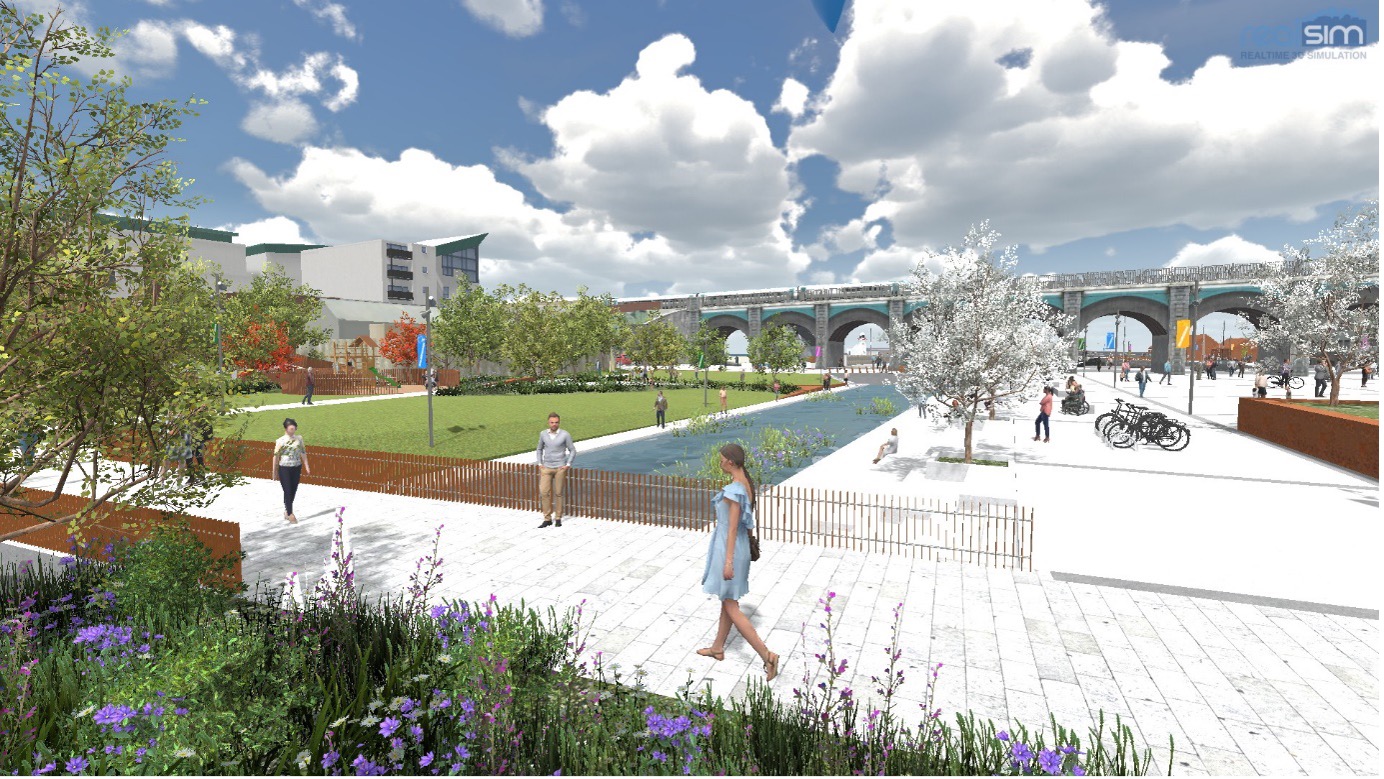
Photo credit: https://realsim.ie/

Context and problem statement

Urban planning and infrastructure development require tools capable of representing complex environments and analysing how proposed changes may affect the built environment.

However, planning processes often rely on traditional 2D documents or static models that are difficult for stakeholders to interpret. This can lead to misunderstandings, slower decision-making, and challenges in communicating projects to the public.

RealSim addresses these challenges through interactive digital twin simulations that combine mapping data, infrastructure models, and simulation technologies into a virtual representation of real environments.

Solution overview

RealSim City is a digital twin solution based on Environment Information Models (EIM) that simulate towns and cities in highly detailed 3D environments. These simulations combine geospatial mapping, architectural data, and engineering information to recreate real urban environments within an interactive digital platform.

The solution enables planners, engineers, and stakeholders to explore cities from multiple viewpoints and analyse the potential impact of new developments before they are built.

By providing immersive visualisation and spatial analysis tools, RealSim City supports better planning decisions and improves communication between developers, authorities, and communities.

Functional Scope and Features

RealSim City integrates multiple capabilities for analysing and visualising urban environments.

  • 3D mapping and modelling: The solution combines aerial mapping data, terrain information, and detailed models of buildings and infrastructure to generate accurate virtual environments.
  • Simulation and spatial analysis: The platform includes tools that allow users to analyse spatial conditions and environmental factors such as lighting or visibility within the modelled environment. Users can explore the city model from any perspective and evaluate how proposed developments interact with surrounding structures and landscapes.
  • Interactive exploration and visualisation: The digital environment can be used as a visualisation platform for planners and stakeholders to understand the spatial implications of development proposals.
  • Scenario analysis: Tools such as dynamic sun positioning, distance measurement, and object placement allow users to test potential modifications to the built environment and analyse their effects.

These capabilities enable cities and developers to assess design options and infrastructure changes before real-world implementation.

Use Cases and Deployments

RealSim City digital twins are used across multiple planning and infrastructure contexts.

  • Urban planning and development: Planning authorities and developers use digital twin simulations to evaluate the impact of proposed buildings and infrastructure projects on existing urban environments.
  • Public consultation and citizen engagement: RealSim’s immersive visualisation tools have been used by local authorities to enable citizens to explore proposed developments through 3D models and virtual reality environments. One example is the collaboration with Fingal County Council in Ireland, where immersive VR tools were used to allow citizens to experience urban development projects during planning consultations.
  • Infrastructure and environmental simulation: Digital twins can also be used to simulate infrastructure systems and environmental conditions to support planning and operational decisions.

Related Challenges

Interested in this solution?

Get in touch to explore deployment opportunities or propose a complementary approach.

Share the Post: