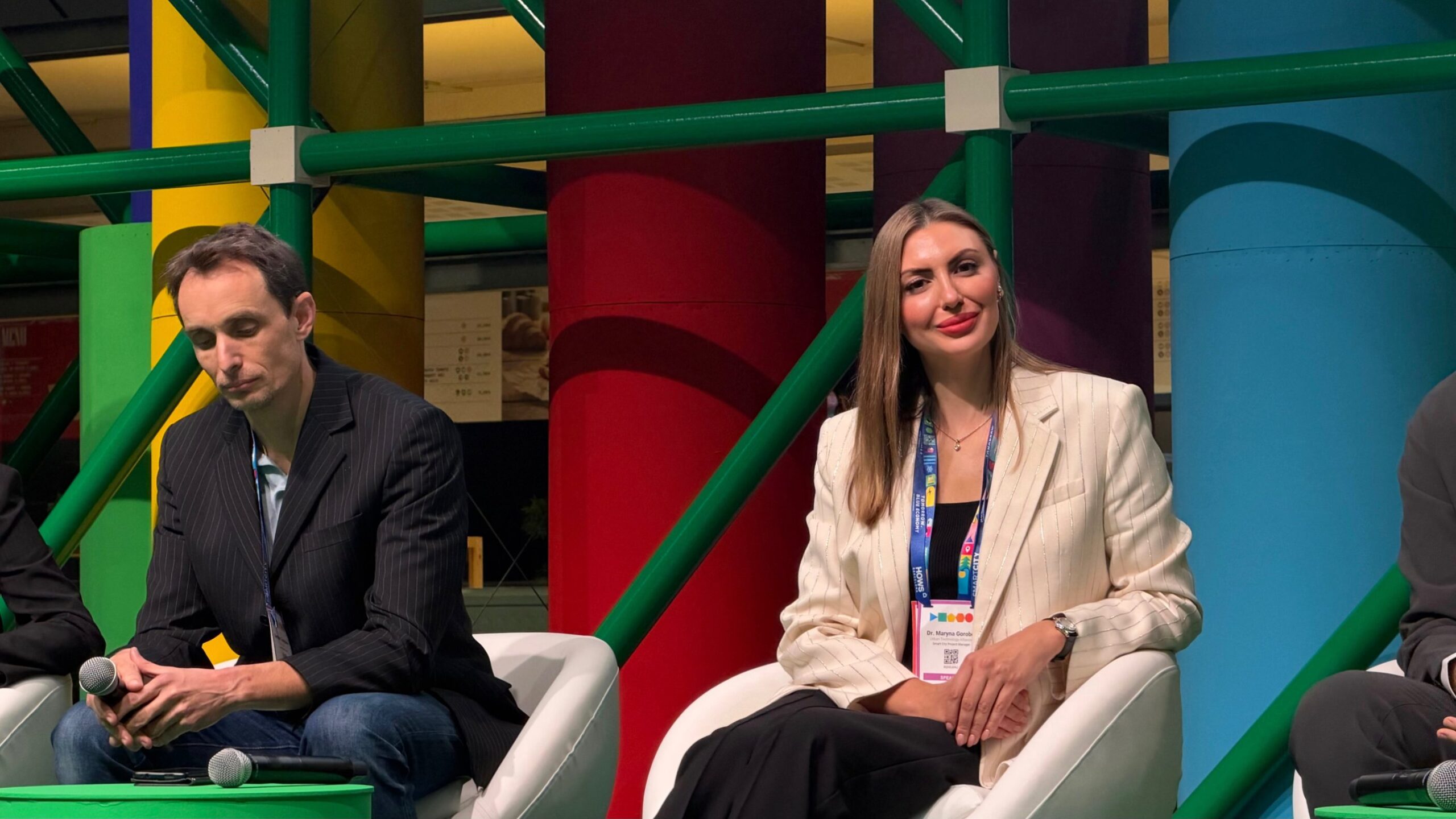
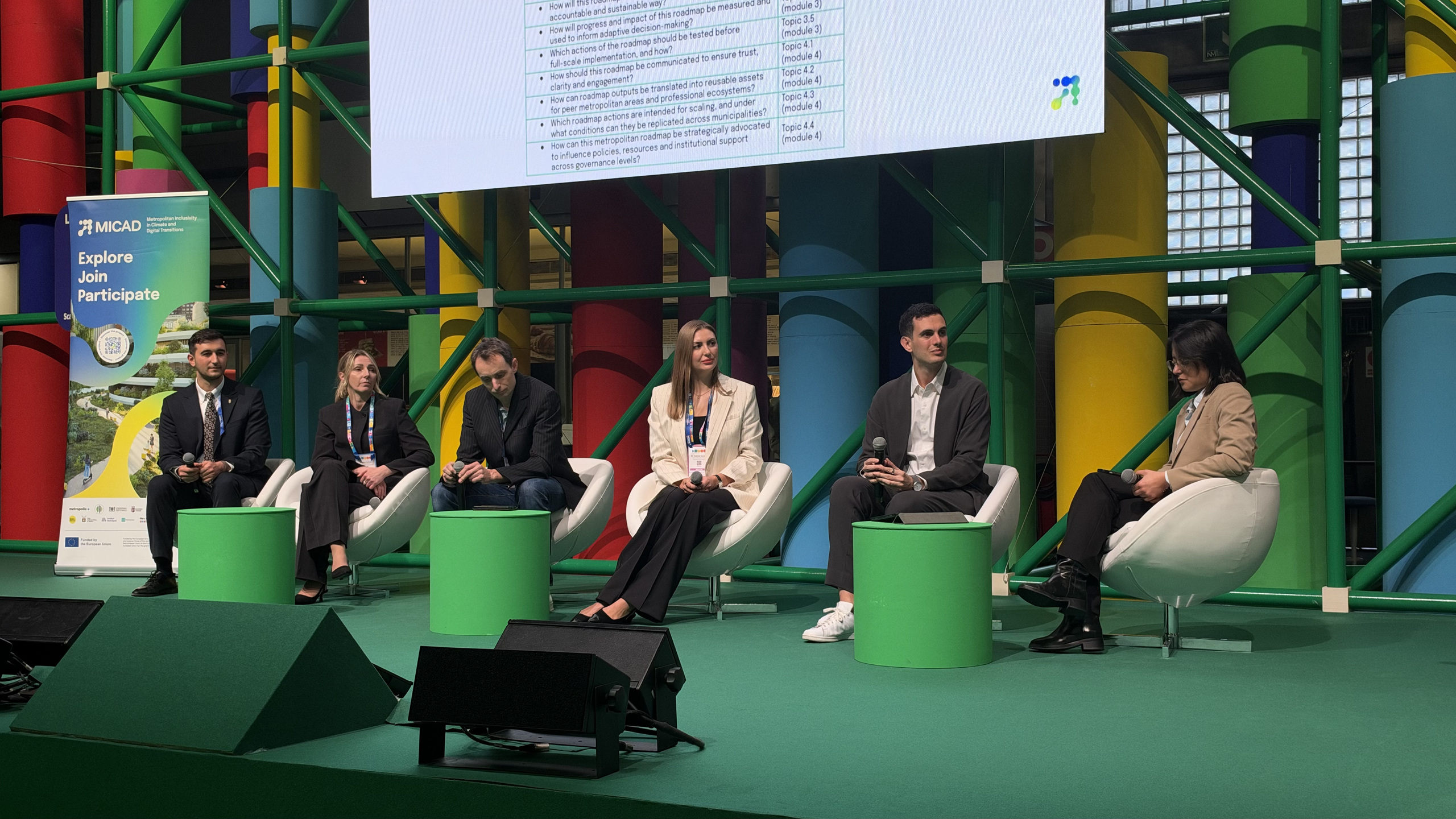
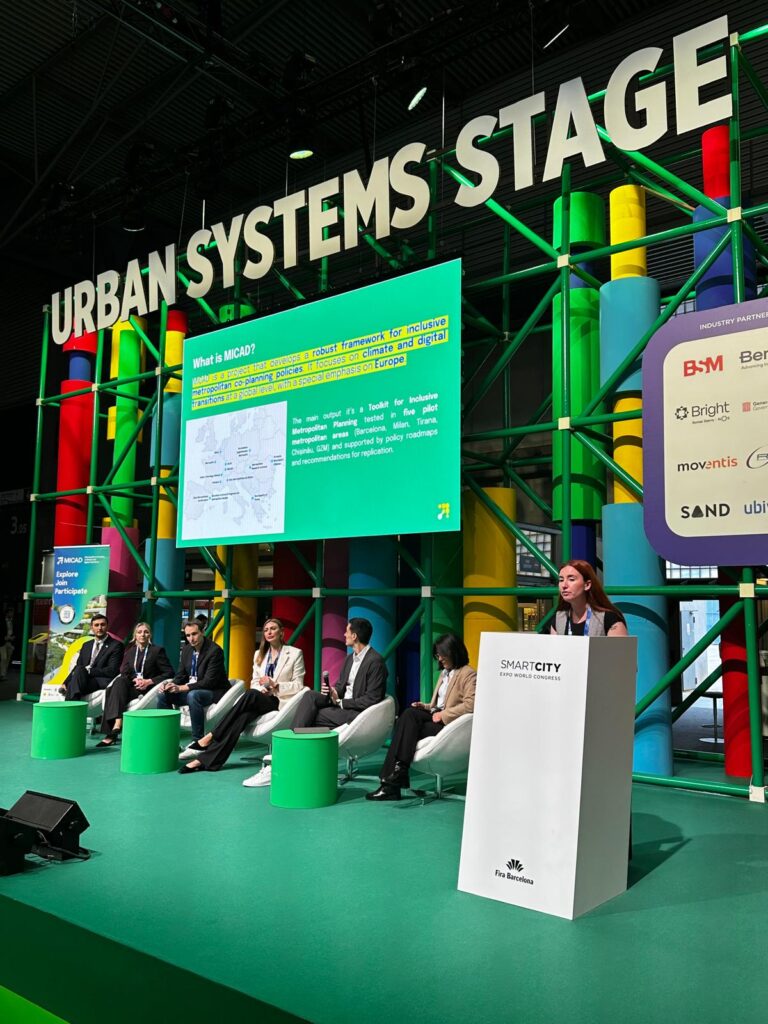
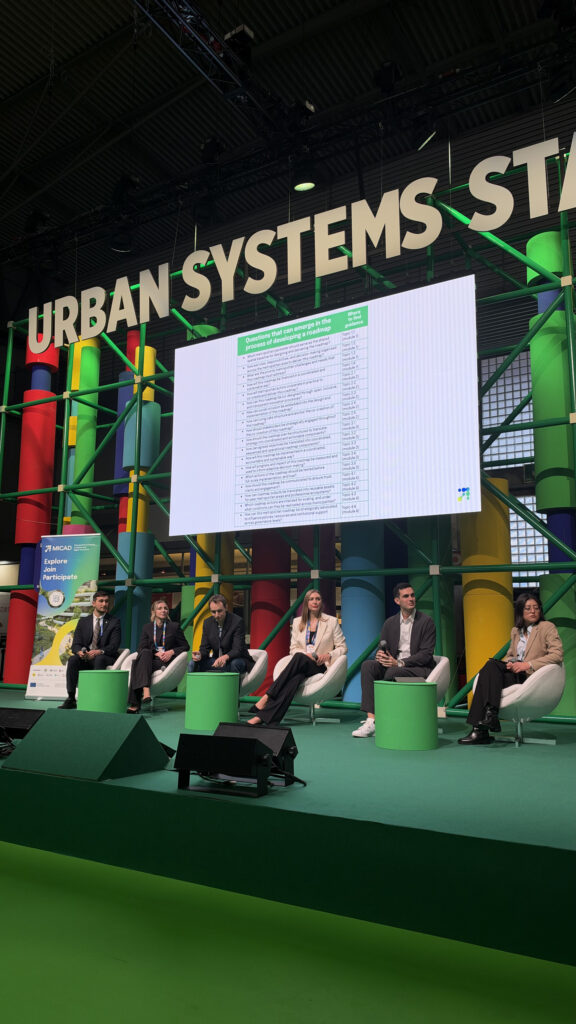
On 3 November 2026, the Urban Technology Alliance (UTA) and Kentyou took the Urban Systems Stage of Smart City Expo World Congress 2026 in Barcelona with their partners in the Horizon Europe project MICAD (Metropolitan Inclusivity in Climate and Digital Transitions). The session, “The MICAD Toolkit for Metropolitan Transitions”, put one of the project’s main outputs to a practical test: three metropolitan areas each brought a real challenge from their roadmap work, and three technical partners showed how a specific topic of the MICAD Toolkit helps address it. Dr Maryna Gorobei, Smart City Project Manager at UTA, presented the Toolkit’s answer on metropolitan governance, and Bertrand Copigneaux of Kentyou its answer on prototyping and testing.
A toolkit built with metropolitan areas
Júlia Palmarola, Programme Officer at Metropolis, which coordinates MICAD, opened and moderated the session. She described MICAD as a response to the crisis of democracy in Europe, built on the idea that public policy should be made with people, not only for people.
The project’s main output is a toolkit for inclusive metropolitan planning, tested in five metropolitan areas: Metropolia GZM, the Barcelona Metropolitan Area (AMB), Chișinău, Tirana and Milan. MICAD is now in its third phase, in which these areas apply the Toolkit to develop their own climate or digital transition roadmaps. In the fourth phase, starting early next year, partners will support the advocacy, communication and replication of the roadmaps, and use their experience to make the Toolkit applicable to any metropolitan area.
The Toolkit is organised into four modules: Analyse & Define, Collaborate & Engage, Develop & Measure, and Communicate & Disseminate. It is designed to be used selectively, starting from the question a metropolitan area is facing. Júlia compared it to a “choose your own adventure” book.
Challenge 1: from fragmented systems to a metropolitan digital roadmap
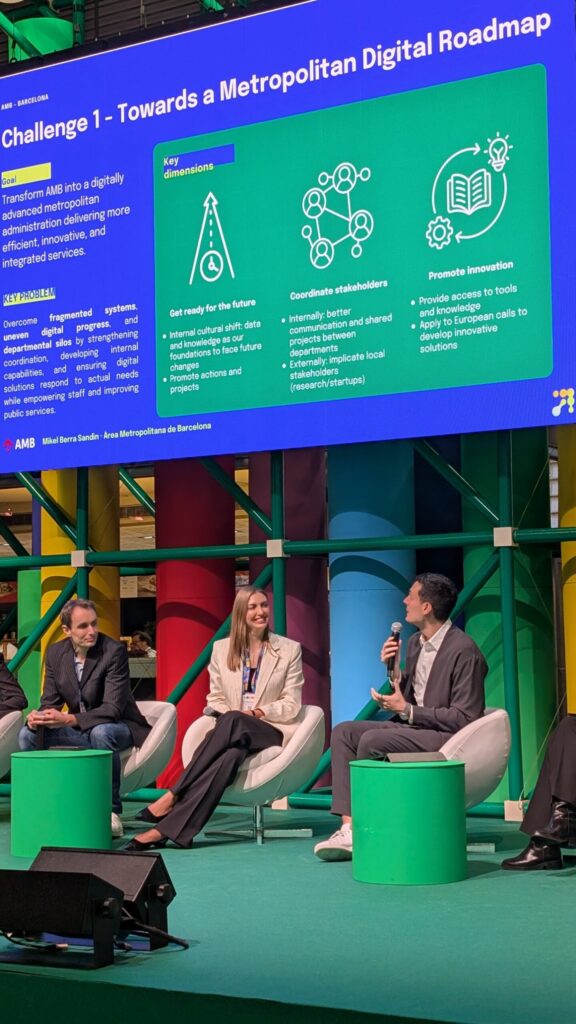
Mikel Berra of the Barcelona Metropolitan Area set out the first challenge. AMB brings together 36 municipalities and wants to offer the same quality of services to all of them, including in the digital realm. Today, however, the situation is fragmented: some departments are very advanced and others are not. AMB is working on three dimensions: preparing for the future through a cultural shift towards data and evidence, coordinating stakeholders inside and outside the institution, and promoting innovation. Building on strengths such as its cartography and geoportal systems and its data centre, it aims to establish data governance across the board, improve processes and platforms, integrate AI and upskill both staff and citizens.
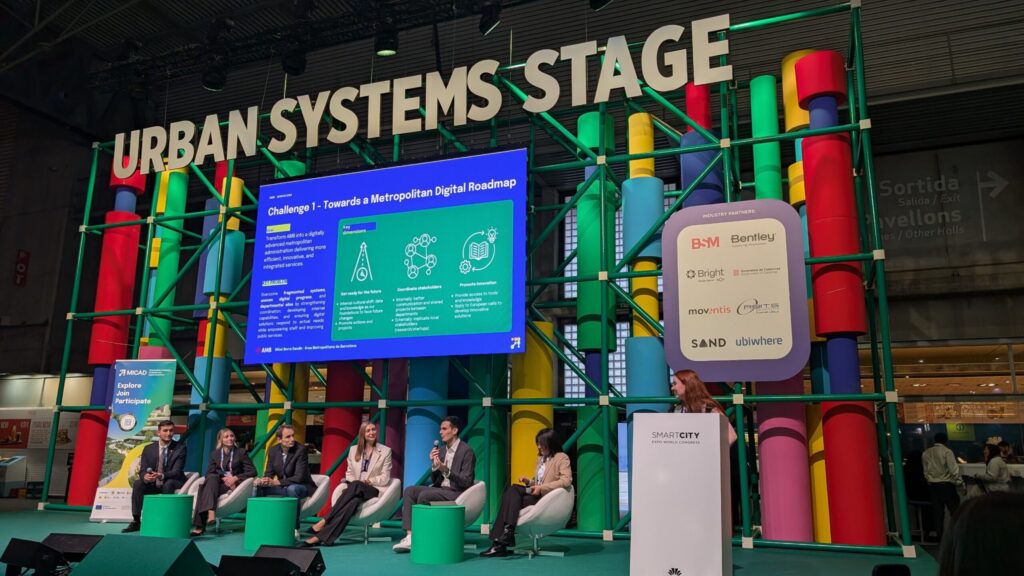
The Toolkit’s answer: Institutional and Governance Structure
Responding for UTA, Dr Maryna Gorobei presented Module 1, Topic 1.2 – Institutional and Governance Structure. She noted that institutional fragmentation is a problem shared by many metropolitan areas, whatever their structure: they usually have different mandates, different budgets and different planning structures. A clear governance structure shows who is responsible for what and who funds a project, and helps avoid duplicated projects, overlapping responsibilities and the unequal participation of smaller or peripheral municipalities.
The Toolkit’s Metropolitan Governance Mapping Tool works in six steps, from governance mapping and competence and mandate analysis, through representation and legitimacy and coordination gaps, to choosing a governance model and securing the capacity to sustain it. A grid visualising step 2 showed how mapping who decides, funds, implements and monitors in areas such as climate, digitalisation, mobility and housing reveals conflicts and overlaps. The Toolkit does not impose a model; it points to the one that fits, illustrated by examples from Milan, Berlin–Brandenburg and Medellín.
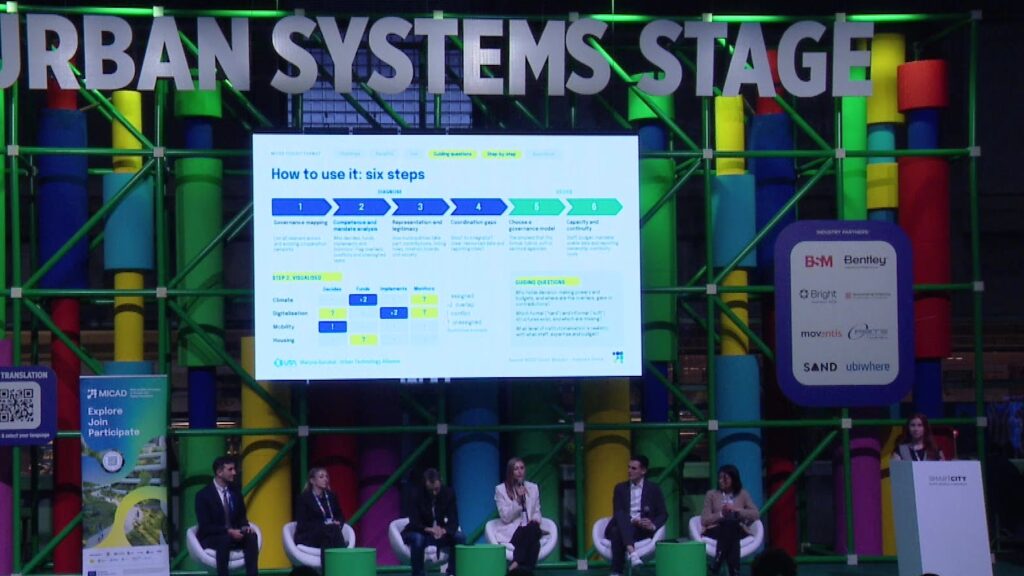
To make the point concrete, Maryna described a school that wants a knowledge portal. The director has one vision, each subject teacher another, and the IT department builds it; in a smaller school with no IT department, a teacher might build it after classes. And then she asked the audience: have we forgotten anyone? The students who will use the portal, she said, are like the citizens who use municipal and metropolitan services. Her conclusion: “Before we decide to build some process or action, we should know who is responsible for what and who decides.”
Challenge 2: making a climate roadmap inclusive
Bogdan Cazacu of Chișinău Municipality presented the second challenge. The city has many climate initiatives across more than 20 departments, but they are fragmented and often donor-driven rather than institutionalised. Through MICAD, Chișinău is developing a climate transition roadmap that brings these initiatives into one document, identifies the gaps and sets a clear timeline. Inclusivity is central: people should be able to shape how they see the transformation. A study of the current situation, including air quality and waste management, is under way, and the roadmap will also reflect Moldova’s commitments on the path to EU accession.
The Toolkit’s answer: Stakeholder Engagement
Michelle Gonzalez of the European Network of Living Labs (ENoLL) presented Module 2, Topic 2.5 – Stakeholder Engagement. Engagement in the public sector, she said, is often siloed, fragmented and short-term, which leads to duplicated efforts, unequal representation and uncertainty about what happens to people’s input. The Toolkit’s stakeholder engagement planning defines who should be involved, for what purpose, at which moment and through which format, helping to manage expectations and avoid stakeholder fatigue.
Its nine steps fall into three phases: planning, engagement and translation, and learning and sustaining. She stressed reporting back to stakeholders on which inputs were used and why, and making engagement part of governance rather than an isolated activity, because “your citizens know the problem better than you”. Examples from Padua, which worked through its existing neighbourhood councils on the way to climate neutrality, and Genk, which ran reflexive sessions with residents, showed the approach in practice.
Challenge 3: testing bio-waste collection before scaling up
Natalia Puchała of Metropolia GZM presented the third challenge. Selective waste collection works well in Poland for fractions such as plastics and metals, but kitchen bio-waste remains a problem in multi-family housing. After diagnosing the issue, GZM is running a pilot this year with one of its member municipalities and the private sector. She added that the Toolkit had been discussed vividly with Metropolis and could be tailored to local needs, which she called a huge plus of the project.
The Toolkit’s answer: Prototyping and Testing
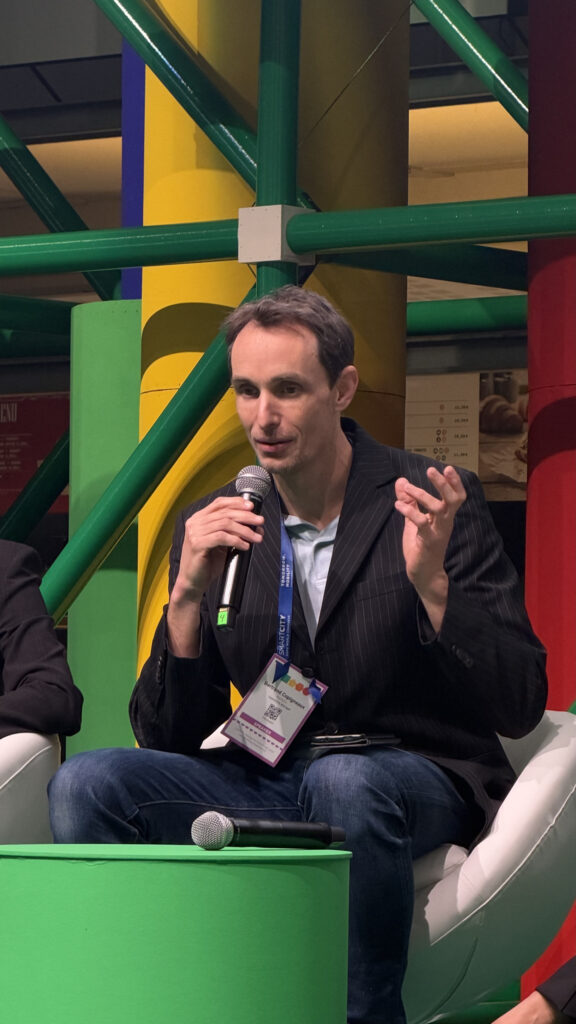
Bertrand Copigneaux of Kentyou presented Module 3, Topic 3.5 – Prototyping and Testing. The challenge, he said, is to move from deploying technology to structured experimentation: defining what needs to be tested and why, choosing representative sites, co-designing with stakeholders, and monitoring results before deciding to scale up or adapt. GZM’s pilot, built on existing collection data and surveys with residents, building managers, waste collection companies and municipalities, illustrates what he called “roadmapping by piloting”: a climate roadmap fed directly by the pilot.
From challenges to practice
Closing the session, Júlia Palmarola summarised the three pairs: digital governance and Topic 1.2, citizen engagement and Topic 2.5, circular economy testing and Topic 3.5. The aim, she said, was to show that the Toolkit is practical and flexible enough to be used in the day-to-day work of a city. UTA will soon share the MICAD Toolkit with its network of cities and members, so that they too can test it in their own context.
For UTA, the session reflected its role in MICAD. Together with Kentyou, UTA co-coordinates the work with the metropolitan authorities of Barcelona, Milan, GZM, Tirana and Chișinău as they develop their roadmaps, where the Toolkit’s methods are now being tested in practice.