
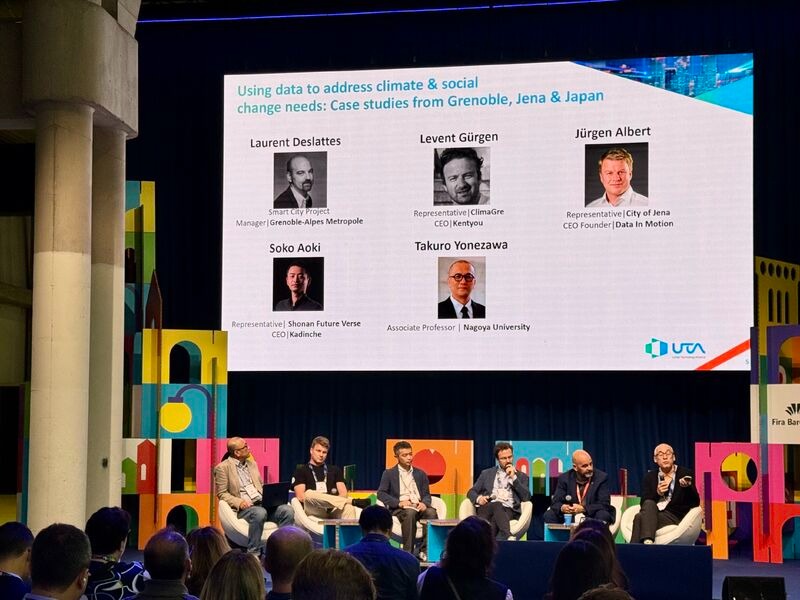
UTA hosted a panel session at the Smart City Expo (SCEWC25) recently to discuss real world case studies showing how cities are using data to address social and climate challenges.
Moderated by Rodger Lea, CTO of the Urban Technology Alliance (UTA), the session brought together an exceptional line-up:
• Laurent DESLATTES, Smart City Project Manager, Grenoble-Alpes Métropole
• Levent Gürgen, CEO, Kentyou, • Soko Aoki, CEO, Kadinche Corporation/ Shonan Future Verse
• Juergen Albert, CEO & Founder, Data In Motion Consulting GmbH / Stadt Jena
• Takuro Yonezawa, Associate Professor, Nagoya University
Using data to mitigate climate change in Grenoble: Urban Heat Islands
Laurent Deslattes led with an overview of some of the climate issues faced by Grenoble city in France with a particular focus on the issue of Urban Heat Islands. These are areas of the city that, during the summer, heat up more than other areas, sometimes they can reach 4-5oC higher than adjacent areas.
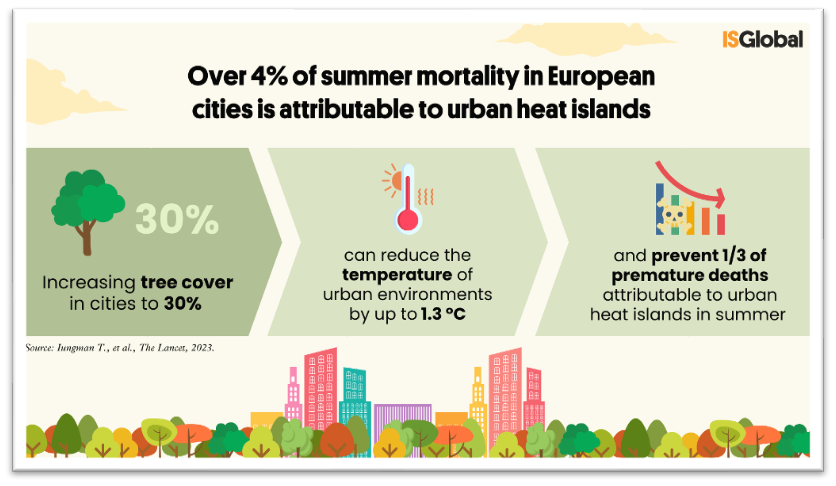
This phenomena is caused by a complex interplay of many factors – the physical topography of the city, the types and size of buildings, roads and associated traffic and green space. Sadly, it has been estimated that 4% of summer deaths in European cities is caused by such heat islands.
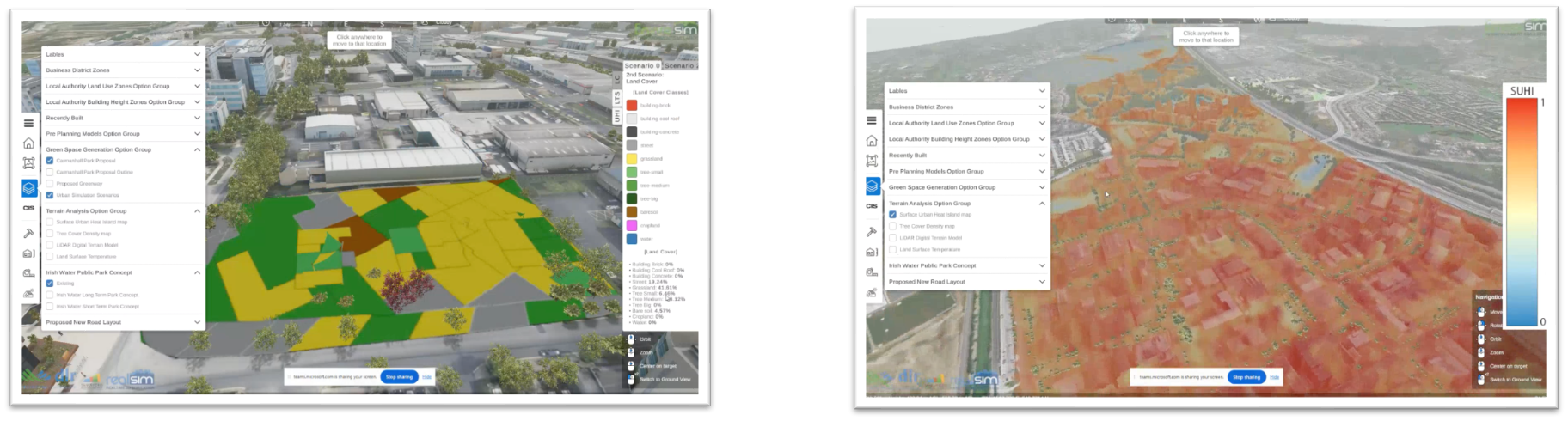
Levent Gürgen then highlighted how Kentyou, with partners Latitudo40 and RealSim were combining their technologies to develop a tool that helps city planners identify and explore mitigation strategies – such as creating more green spaces, or adapting buildings, or even changing traffic routes.
How modelling and simulation can help plan for and response to emergency situation
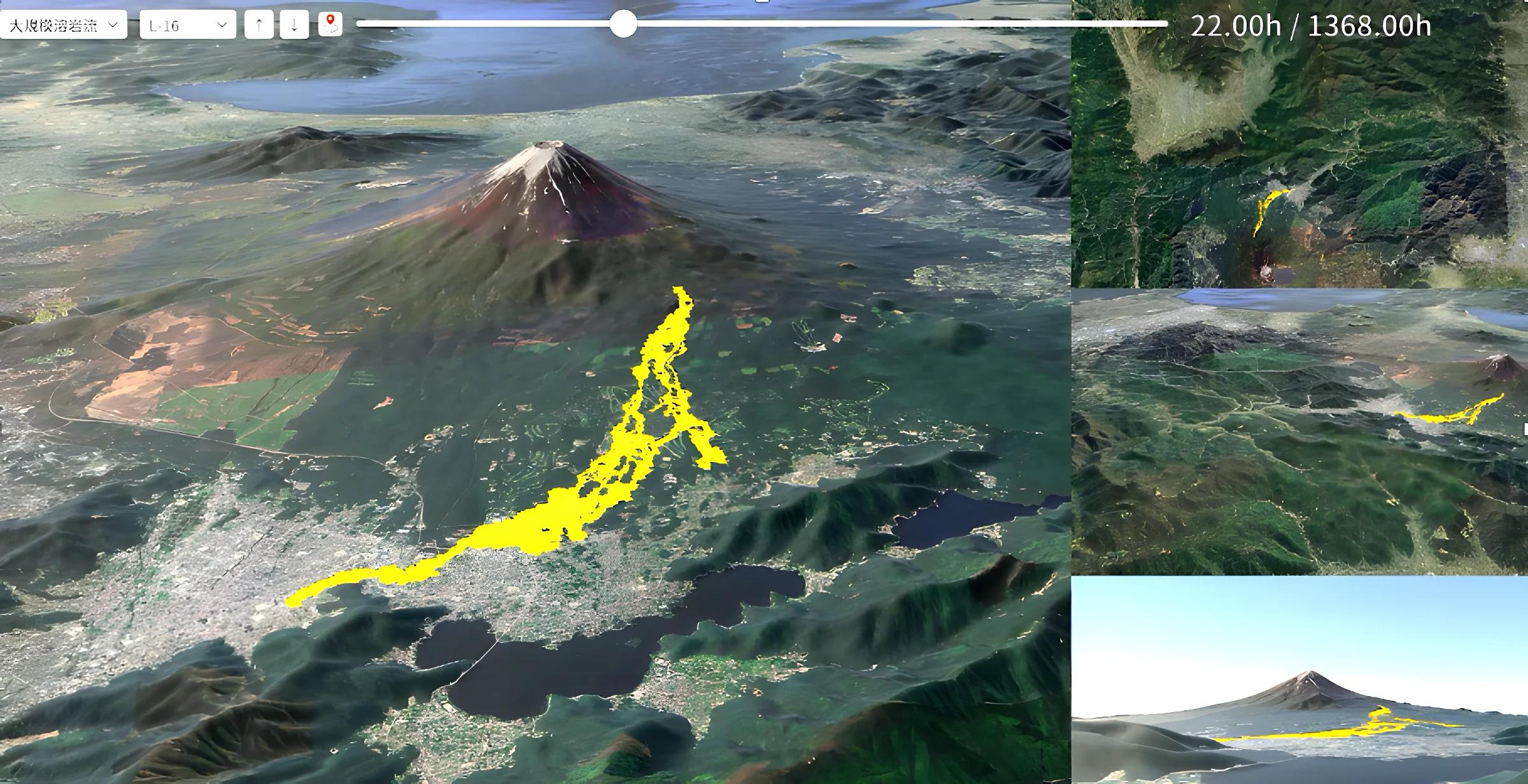
Soko Aoko of Kadinche corporation in Japan then presented 3 projects they have been involved in that use advanced 3D graphics and modelling to help cities plan for climate related issues – the first 2 examples from Japan looked at modelling people flows in a theme park to better understand heat stress and modelling lava flows on mount Fuji to help with disaster planning.
In a similar way, his third example had been developed for the Government of Nepal and modeled flooding in high glacial values and the potential impact on villages in the mountains and their basic infrastructure.
Ensuring data Data in the City of Jenna
Jürgen Albert discussed the use of data in Jena city in Germany. Highlighting the evolution of their work from initial data gathering to better understand city status, through analytics, and recently focusing on the complex issue of data compliance. He highlighted how the growth in EU laws, such as GDPR, has led to significant issues for the city and talked about a new tool designed to analyse data held by the city to highlight compliance issues. This tool
Data for social inclusion
The final short presentation was made by Takuro Yonezawa of Nagoya university. He identified that as society becomes increasingly urbanised, one of the key issues for modern society is loneliness.
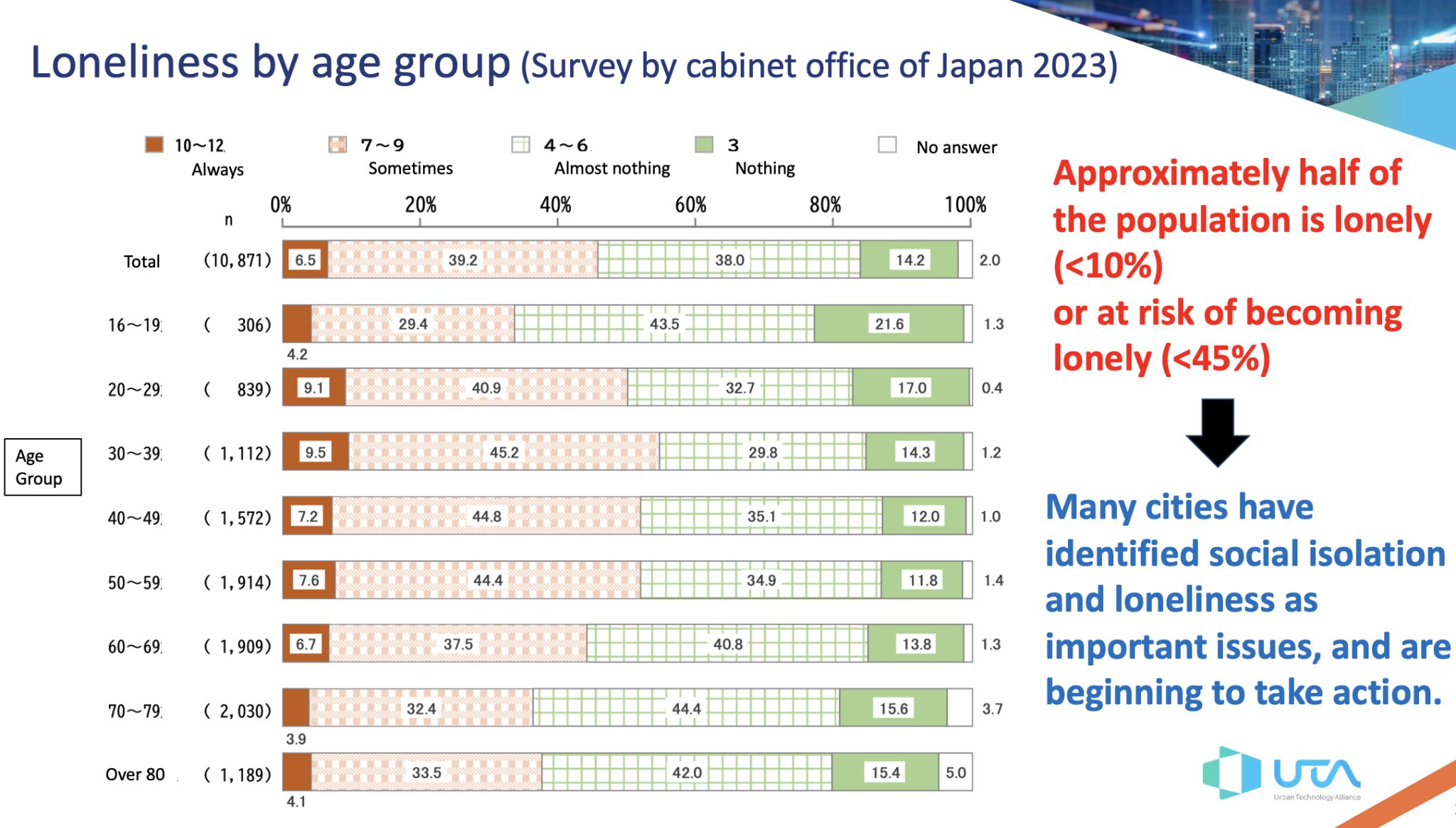
He started his presentation with a survey carried out in Japan that identified loneliness by age group. Although there is a common belief that this is mostly an issue for older people, the survey highlighted this is a common problem across all age groups, and is actually highest in the 30-39 year old age group.
He went on to describe a project, Community Compass, that is looking at ways to help members of the community aware of activities in the local community. Two examples were show, the first focused on health awareness and used LLMs to suggest local community groups that could help with health issues.

The second examples looked at a simple but powerful intervention whereby the Point of sale (POS) terminals in local shops also provided information on local community groups that were active.
Discussion
Following the initial presentations, there was a discussion session that highlighted a number of key points.
- Role of Data – the various examples highlighted the opportunities that arise when cities have access to a broad range of data. The discussion focused on the need for a common data platform that tied together city data sources, and enabled 3rd party access to the data.
- A significant challenge for cities when gathering and managing data is the need to adhere to data management guidelines and regulations such as GDPR. The panel identified this as a growing area of complexity and highlighted the need to build into the data management tools the ability to track data compliance.
- Climate change was obviously a significant issue for many of our member cities. The panel discussed the status of activities in their respective cities and it was clear that although many cities had ongoing activities, often they were not coherent and part of an overarching climate strategy. Clearly cities still have work to develop and deploy climate policies and strategies and data was critical to developing policies and strategies.
- The role of testbeds was highlighted by several of the panel members. They discussed the critical need for cities to develop capabilities to rapidly try out new approaches and in particular to find ways for cities to engage 3rd parties in deployments. As discussed in point 1, access to a well defined data platform was critical, but also policies and frameworks for 3rd parties to quickly develop and deploy trials.
Conclusion
The panel showcased concrete, data-driven technologies addressing pressing urban challenges — from Grenoble’s Climagre decision-support tool for mitigating heat-island effects, to Jena’s integrated data-governance approach for resilient and sustainable city services, and Japan’s innovative use of digital twins and community platforms for disaster management, strengthening social connection and reducing isolation.
One of the key takeaways: cities often lack the time and capacity to test new solutions internally. This is where strong alliances like UTA make a difference — providing trusted environments where innovations can be co-created, tested, and scaled efficiently in real urban settings.
A huge thank you to our speakers and to everyone who joined us — the room was filled to capacity, with standing attendees and a vibrant atmosphere resonating with ideas and enthusiasm!