
Eight months after Japanese organisations became eligible for Horizon Europe, the conversation moved from possibilities to practical steps. The session focused on how organisations can find partners, build strong teams, and turn shared ideas into real projects.
In session 2 of UTA Café, speakers shared their views on international testbeds, AI-ready agricultural data, urban data integration, and the practical aspects of Horizon Europe applications.
Building the Connections
Dr Takuro Yonezawa, Associate Professor at Nagoya University, opened the session by highlighting new opportunities for practical collaboration between Europe and Japan.
Dr Rodger Lea, CTO of the Urban Technology Alliance (UTA) and CEO of STS, explained how UTA helps make these connections. UTA brings together cities, researchers, and innovators from 20 countries across three continents to tackle shared challenges.
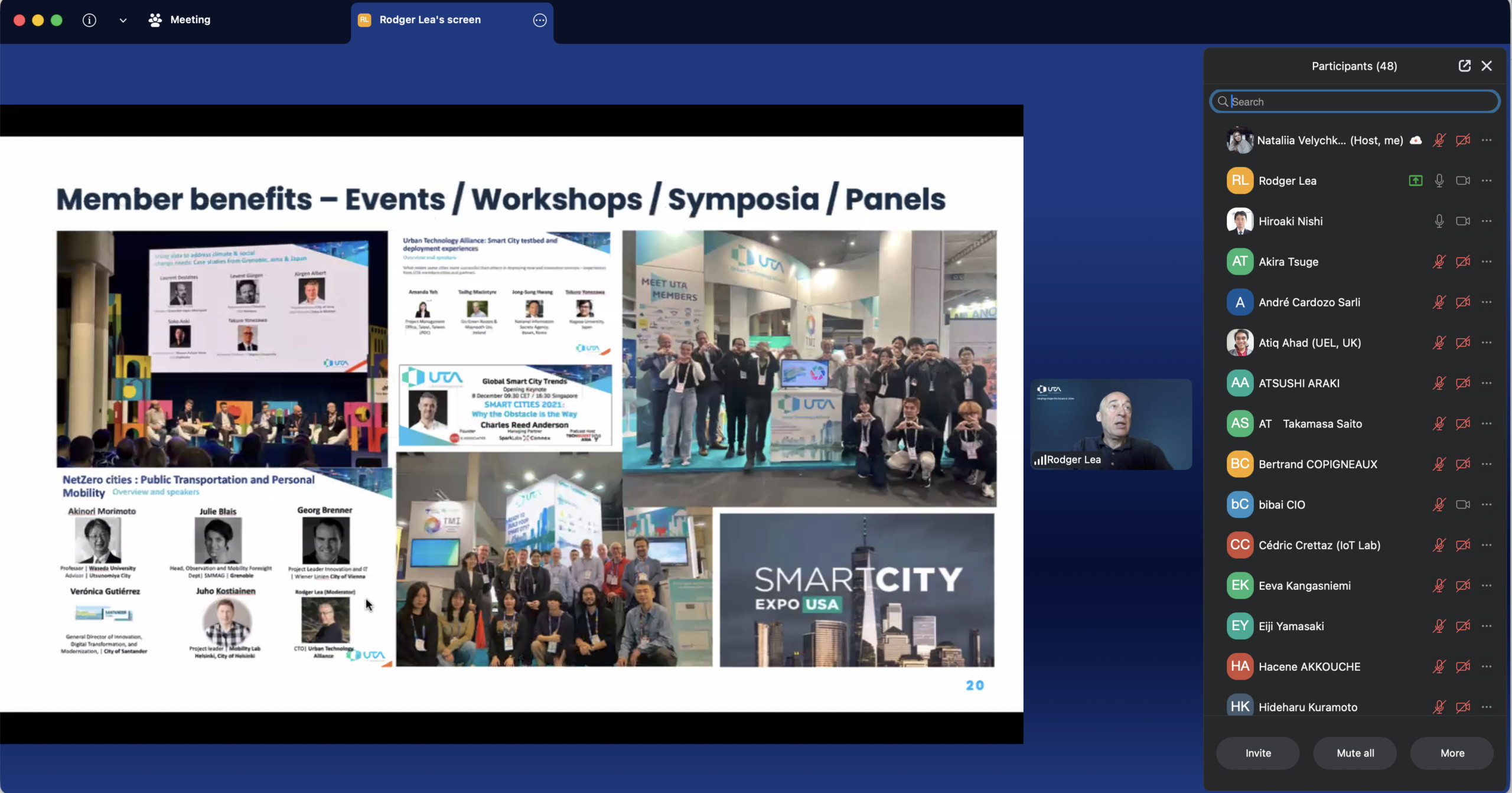
When cities face challenges, UTA helps set up real-world testbeds to try out and assess possible solutions. This has already resulted in over 50 pilot projects and a European project portfolio worth about €24 million.
Innovation rarely happens alone, since local challenges often need expertise and teamwork from around the world.
When Data Starts Speaking the Same Language
Prof. Hiroaki Nishi of Keio University introduced IEEE 2992, a new recommended practice for data expression, exchange, and processing in smart agriculture. This standard offers a common framework for structuring and sharing agricultural data, making it easier for different systems and technologies to work together.
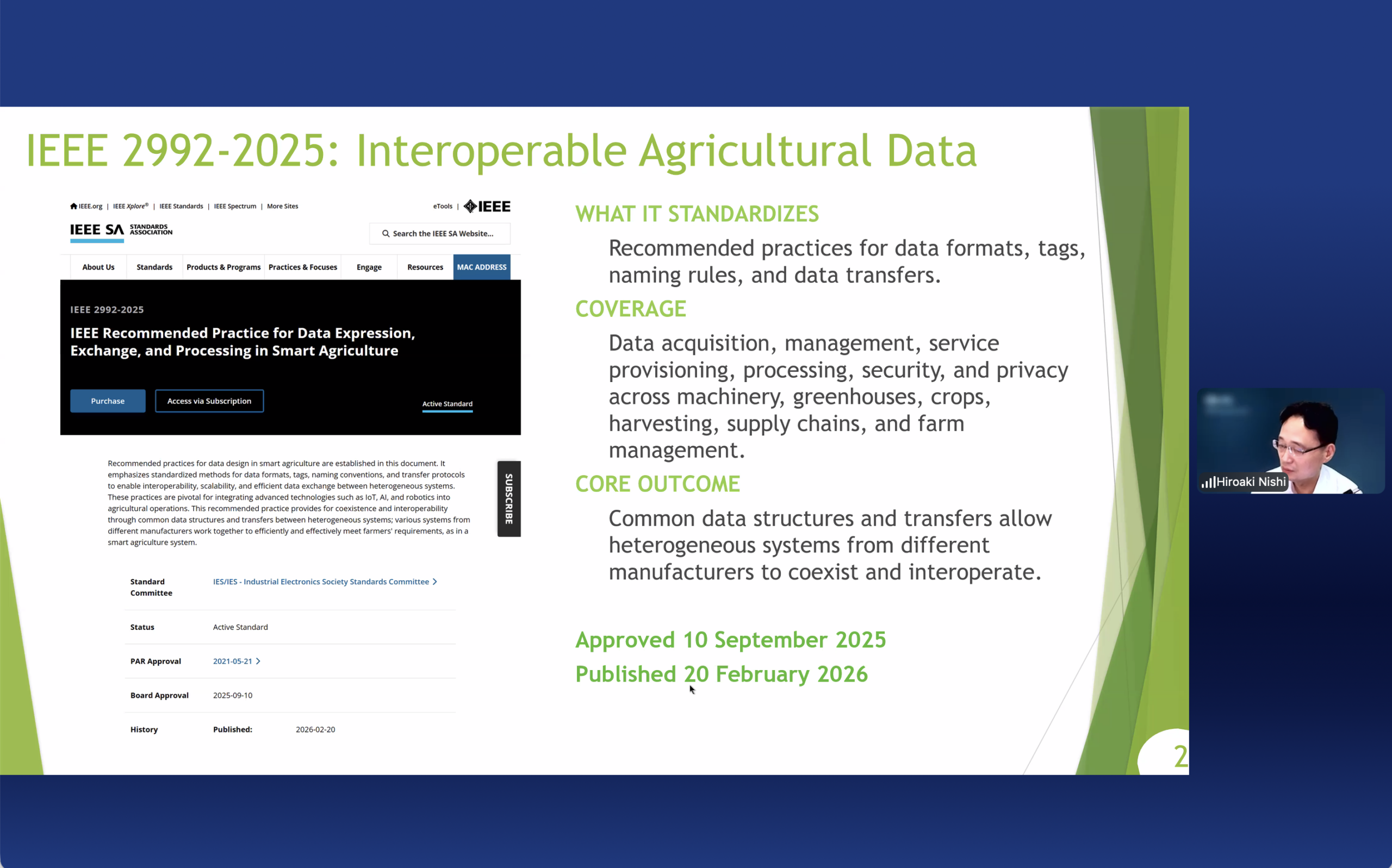
Anyone who works with complex data systems understands the challenge this standard addresses. Different sensors, platforms, and technologies may collect information about the same environment, but if they describe it differently, connecting the systems becomes difficult.
Every new integration can seem like starting from scratch. IEEE 2992 aims to solve this issue.
Developed with agricultural facilities in Tochigi and Mie prefectures in Japan, the standard gives agricultural data a shared structure. By using a hierarchical naming system for things like field assistance, control operations, and production and distribution, information keeps its meaning as it moves between systems.
This is already happening in Tochigi, Japan. Sensors on eggplant farms collect data about environmental conditions and plant traits to help improve growth. Once the data is structured and shared between systems, it supports more advanced technologies. Prof. Hiroaki Nishi’s team is building digital twins of greenhouses and using machine learning, including transformer-based networks, to predict energy use, inside temperatures, and crop yields.
These predictions help guide decisions about greenhouse operations and how to use on-site solar energy. Better data leads to better decisions, which can improve productivity, efficiency, and quality.
The Hidden Challenge of Urban Data
While agriculture focuses on connecting different systems, cities face this challenge on an even larger scale.
Prof. Toshiyuki Amagasa from the University of Tsukuba shifted the focus to urban data and pointed out an important fact: analysing data is often not the hardest part. According to the figure he presented, pre-processing can account for around 80% of the total effort involved in data analysis.
Urban information comes from many sources and in many formats. For example, a citizen report might use a street name in everyday language, while a city database records it differently. Analysts must link these references before they can combine the data. Named entity recognition is important for this process.
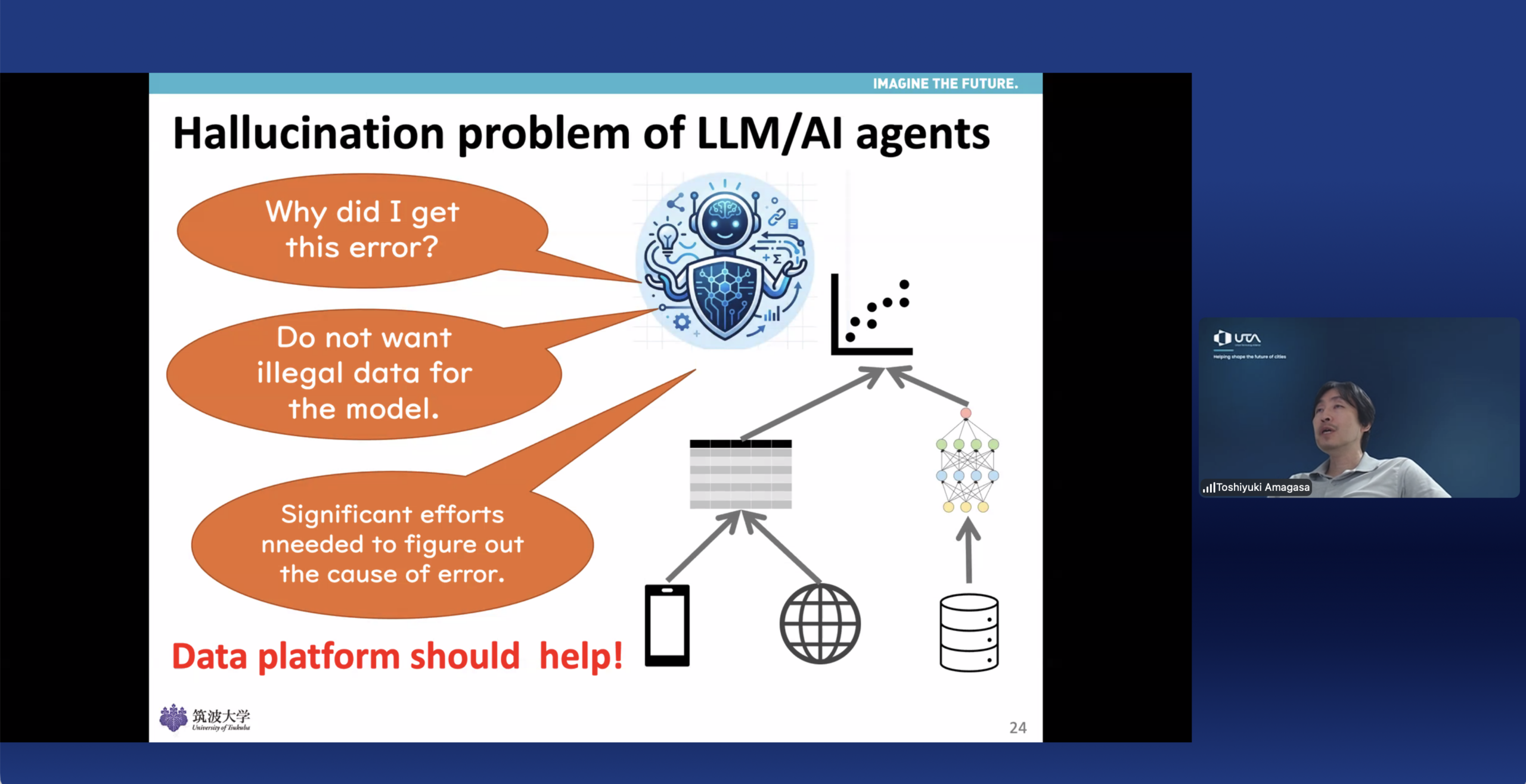
Prof. Toshiyuki Amagasa discussed research that connects words in text to the real-world places and things they describe. His work builds on earlier EU–Japan collaboration through BigClouT, including tests in Tsukuba where a smartphone app collected complaints from foreign visitors and translated them for city officials.
Today, the research is moving further. Prof. Toshiyuki Amagasa’s team is working with language models for low-resource languages like Tigrinya, spoken mainly in Eritrea and northern Ethiopia. They are also testing adapter-based methods that let models specialise without full retraining. The journey from a conclusion back to its sources remains visible. In today’s complex cities, understanding where data comes from may be just as important as the analysis itself.
From Opportunity to Application
By this point, the session had shown why Europe and Japan have strong reasons to work together.
Bertrand Copigneaux, Operations Manager at Kentyou, addressed the next question: how can an organisation turn this opportunity into a Horizon Europe project? By 2026, Japanese organisations can join Horizon Europe, supported by a Japanese contribution of €6.6 million to the programme.
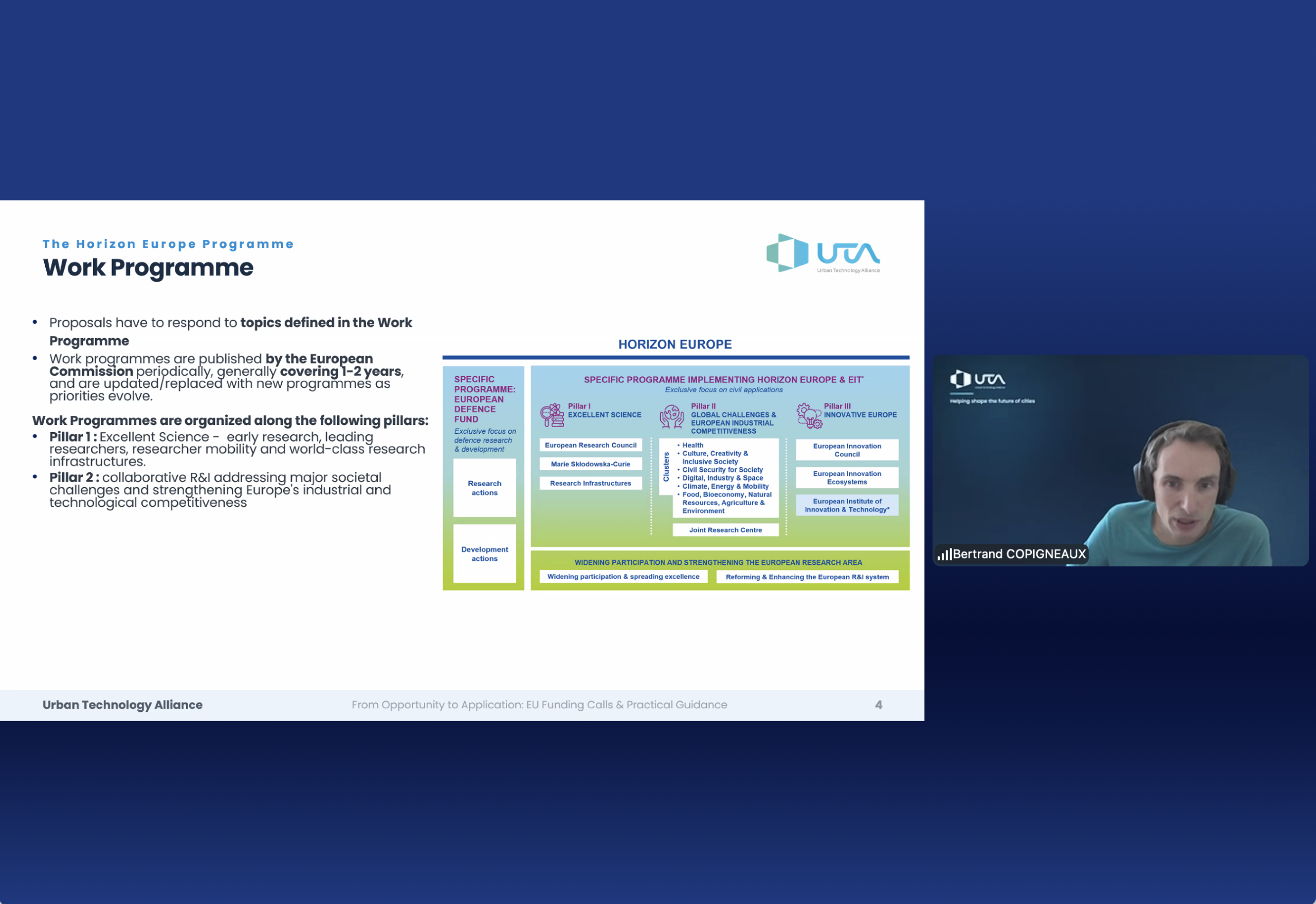
But eligibility is only the first step. Bertrand Copigneaux guided participants through the practical steps: finding the right funding call, choosing partners, forming a consortium, writing a proposal, and creating a budget.
Some calls have success rates as low as 2%, and it can take up to two years from a published call to the start of a project. Waiting for the right call to appear may already be too late.
The best partnerships are built well before deadlines. Organisations need time to get to know each other, combine their expertise, and turn shared ideas into strong proposals.
The session pointed out two opportunities with November deadlines: an Innovation Action on risk monitoring and resilience of critical entities and a Research and Innovation Action on risk awareness and enhanced disaster preparedness. Both calls encourage international cooperation and offer promising chances for new EU–Japan consortia.
When a Proposal Becomes Reality
Dr Maryna Gorobei, Smart City Project Manager at the Urban Technology Alliance, explained what happens after a consortium succeeds. She shared three EU-funded projects involving UTA or its members, showing how ideas from international partnerships can become real-world solutions.
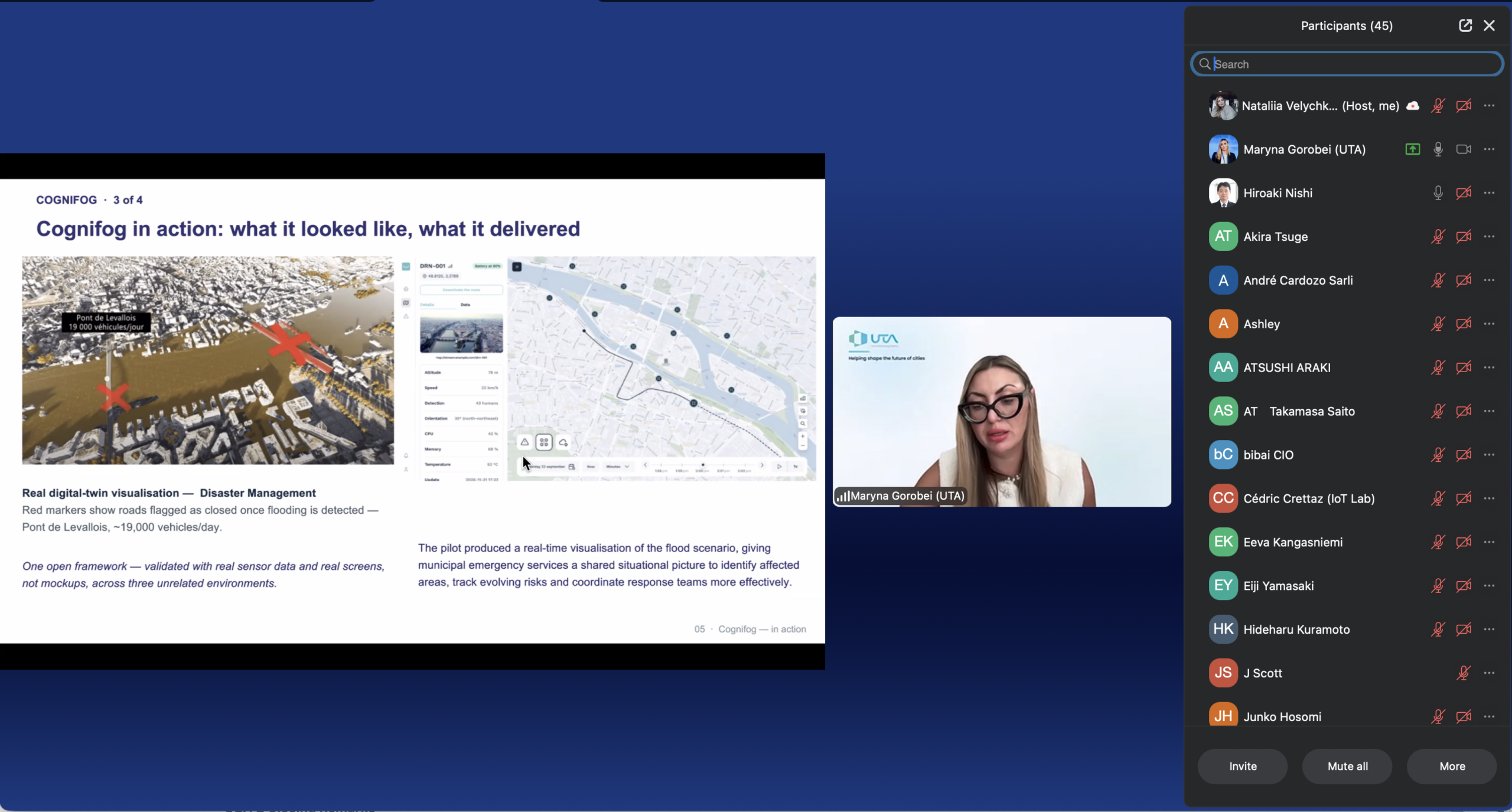
COGNIFOG is creating an open cognitive fog framework that processes data close to where it is produced, rather than sending it all to a central cloud. With a budget of about €5 million, this technology is being tested in disaster management, telemedicine, and smart manufacturing.
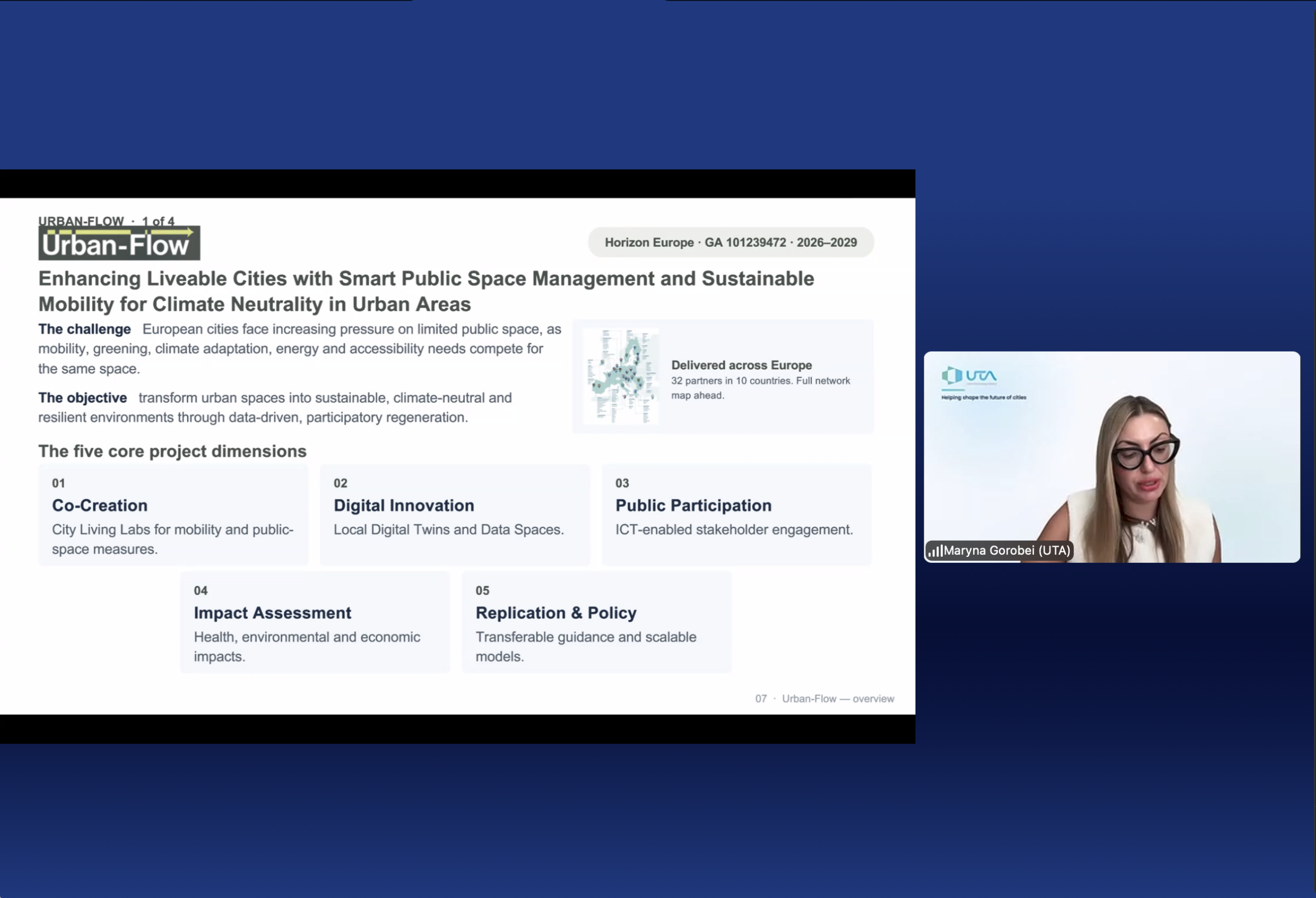
URBAN-FLOW tackles another issue: the lack of usable public space in European cities. With a budget of about €17 million and more than 30 partners across ten countries, the project uses data and citizen input to rethink how cities use urban space.
MICAD addresses another challenge for cities. Often, cities handle climate and digital transitions separately, using different teams, budgets, and strategies. MICAD brings these two areas together by creating a shared framework and toolkit for metropolitan areas. The consortium includes nine countries and has a budget of about €3 million.
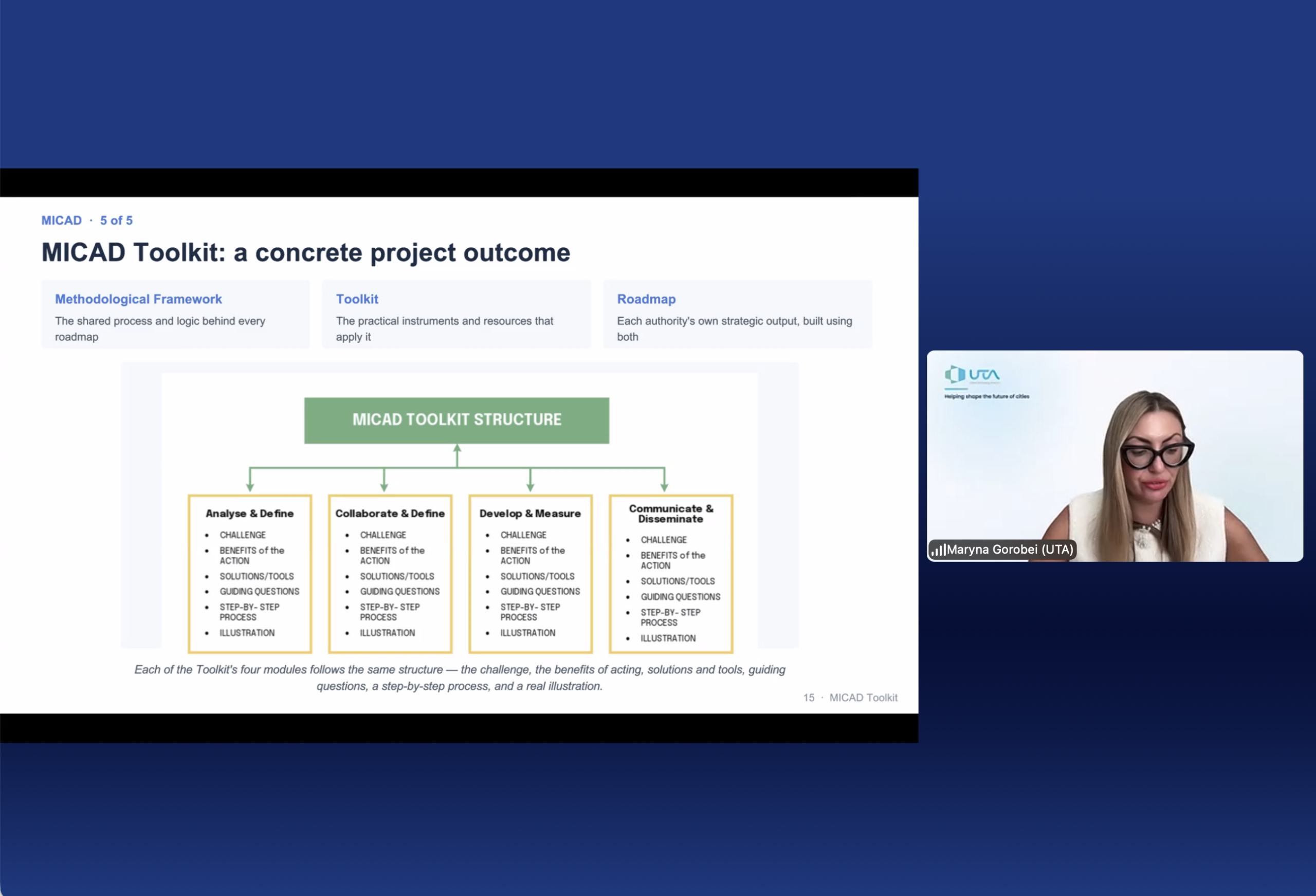
One practical result of the MICAD project is a prototype toolkit to help local authorities approach digital and climate transitions from an inclusive metropolitan perspective. The toolkit offers practical advice to cities and metropolitan areas as they consider their own transition paths, governance approaches, and local priorities.
Cities and local authorities interested in exploring and testing the toolkit are invited to express their interest in participating in the testing phase and providing feedback on the prototype. UTA would be happy to share the toolkit and work with interested cities to gather practical insights and further improve the resource.
To express interest in testing the toolkit, please contact Maryna Gorobei at Maryna.Gorobei@urbantechnologyalliance.org.
Across these projects, UTA helps test systems, supports cities in aligning their climate and digital goals, and develops practical tools others can adapt and use.
Getting funding is only the first step. Real progress happens when organisations connect, build trust, share expertise, and turn shared goals into solutions that can be tested and used in real life.
The third and final session of the UTA Café | EU–Japan Webinar Series will take place on 8 October 2026.
Stay connected with the Urban Technology Alliance and subscribe to the UTA Newsletter for updates on upcoming UTA Café sessions, Horizon Europe funding opportunities, member success stories, pilot projects, smart city events, and the latest news in smart and sustainable cities.