
âś… Finalized
⇨
The Fujisawa Smart Parks pilot explores how digital tools and data analytics can support data-driven management of urban public parks. The city introduced a mobile application enabling park staff and citizen groups to report incidents, maintenance needs and infrastructure issues directly from the field. The collected data is integrated into a smart city platform, enabling real-time monitoring, analytics and visualisation of park usage and maintenance activities.
To enhance municipal park services through the use of data analytics, real-time reporting and smart city platforms that support proactive maintenance planning, resource optimisation and citizen engagement.
Urban public parks represent essential infrastructure for quality of life, health and social interaction in cities. However, maintaining park infrastructure and responding efficiently to incidents remains challenging for municipal authorities. Fujisawa City has experienced an increasing volume of park-related reports from both staff and citizens, creating a need for better data management, analysis and decision support tools.
To address these challenges, the city introduced a digital reporting system and partnered with technology providers to analyse, integrate and visualise the collected data. The pilot explores how IoT data, citizen feedback and historical incident records can be combined within a smart city platform to support proactive park management.
The pilot focuses on several operational and strategic challenges related to urban park management:
Fujisawa City faced increasing challenges in managing and maintaining its public parks due to a growing number of reported incidents and maintenance requests. Issues such as damaged equipment, graffiti, vegetation management and other operational problems were reported by both park staff and citizen groups. However, these reports were often fragmented and difficult to analyse collectively, making it challenging for municipal services to prioritise interventions and plan maintenance activities efficiently.
At the same time, the city began collecting an increasing volume of incident data through digital reporting tools. The main challenge therefore became how to effectively analyse and use this data to improve park management, anticipate maintenance needs and optimise operational resources.
The pilot deployed a smart city data platform capable of integrating multiple sources of information related to park operations and maintenance.
Key technological components included:
The system also enables the clustering of incidents to detect duplicate reports and identify recurring problems within specific parks or types of equipment.
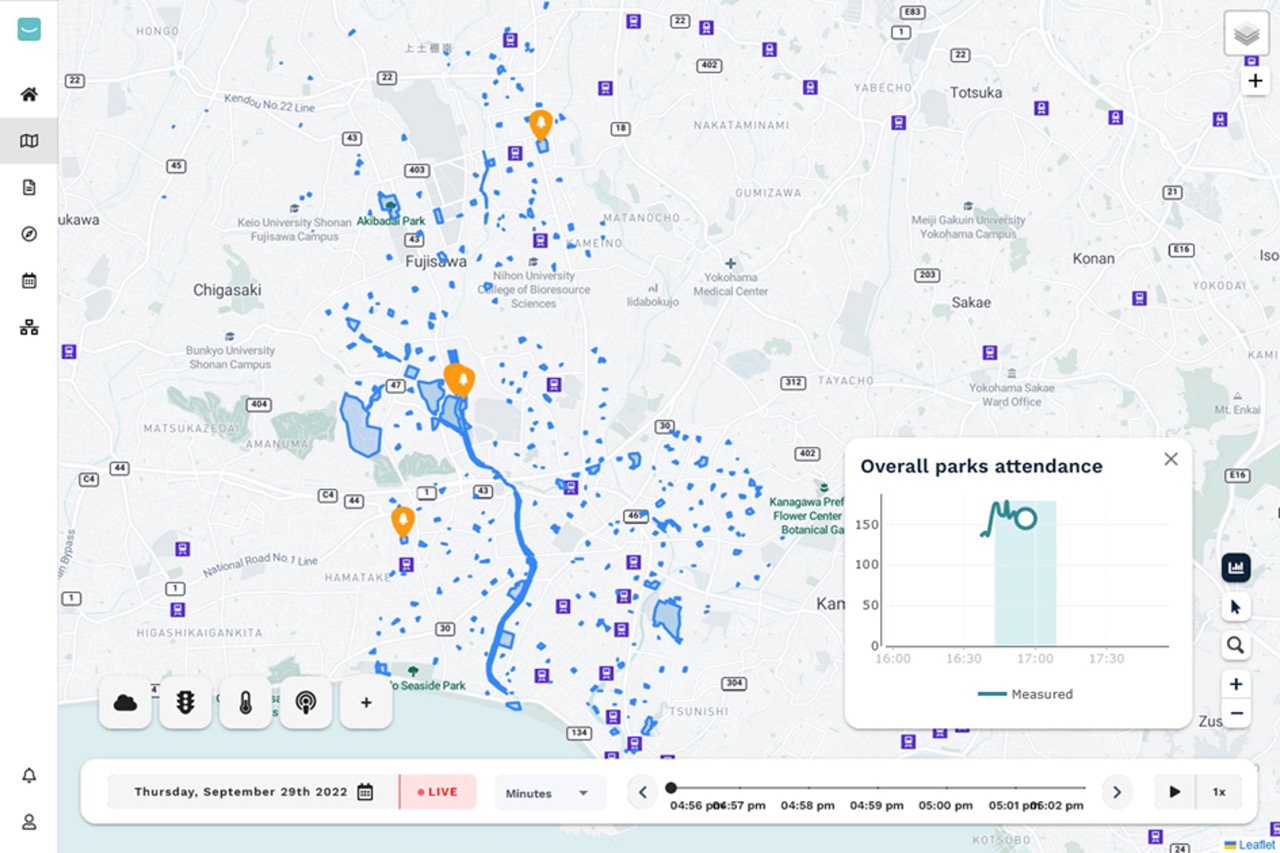
Kentyou Eye integrates heterogeneous data sources, including mobile application reports, IoT sensors and historical datasets, within a single platform. The system enables real-time monitoring of park usage and conditions, as well as predictive analytics for infrastructure maintenance. Through intuitive visual dashboards, municipal services can obtain situational awareness and quickly identify emerging issues or long-term trends affecting public parks.

The pilot successfully demonstrated the integration of incident reporting systems with smart city data platforms and analytics tools. It enabled the city to centralise multiple data sources and provide municipal services with a unified operational view of park management activities.
The system enabled Fujisawa City to move from reactive maintenance towards a more proactive and data-driven approach. Municipal staff gained improved situational awareness, enabling faster decision-making and better allocation of resources.
The pilot demonstrated the potential of integrating citizen reporting tools, IoT data and urban data platforms to improve the management of public spaces. The approach provides a scalable model that can be applied to other urban services and infrastructure domains.
Future developments include the expansion of the system to additional urban services, integration with broader smart city platforms and potential replication of the approach in other cities interested in data-driven park management.